
Contents
- 🌐 Introduction to Phenomenology
- 📚 History of Phenomenology
- 👥 Key Figures in Phenomenology
- 💡 Methodology of Phenomenology
- 🔍 Applications of Phenomenology
- 🤝 Relationship to Other Philosophical Disciplines
- 🌈 Criticisms and Controversies
- 📊 Future Directions in Phenomenology
- 📚 Phenomenology in Modern Philosophy
- 👀 Implications of Phenomenology
- Frequently Asked Questions
- Related Topics
Overview
Phenomenology, founded by Edmund Husserl in the early 20th century, is a philosophical movement that focuses on the study of conscious experience or perception. It seeks to understand how individuals experience and interpret the world around them, without making assumptions about the nature of reality. Phenomenologists like Maurice Merleau-Ponty and Martin Heidegger have built upon Husserl's work, exploring the relationships between the self, the world, and others. With a vibe rating of 8, phenomenology has had a significant influence on various fields, including psychology, sociology, and anthropology, and continues to be a topic of debate and discussion. The controversy surrounding phenomenology's subjective approach has led to criticisms from some, who argue that it lacks objectivity and scientific rigor. Nevertheless, phenomenology remains a vital area of study, with many scholars and researchers drawing upon its insights to better understand human experience. As the field continues to evolve, it is likely to remain a key area of inquiry in the humanities and social sciences, with potential applications in fields like artificial intelligence and cognitive science.
🌐 Introduction to Phenomenology
Phenomenology is the study of conscious experience or perception. It is a philosophical discipline that seeks to understand how individuals experience and interpret the world around them. Phenomenology is often associated with the work of Philosophy and Edmund Husserl, who is considered the founder of the discipline. The term 'phenomenology' comes from the Greek words 'phainomenon' meaning 'that which appears' and 'logos' meaning 'study' or 'science'. Phenomenology is concerned with the study of conscious experience, including Perception, Consciousness, and Intentionality.
📚 History of Phenomenology
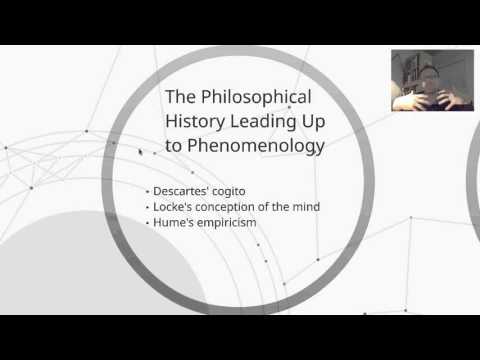
The history of phenomenology dates back to the early 20th century, when Edmund Husserl first introduced the concept. Husserl's work built on the ideas of Franz Brentano and Immanuel Kant, who also explored the nature of conscious experience. Phenomenology gained popularity in the mid-20th century, particularly in Europe, where it influenced the work of Martin Heidegger, Maurice Merleau-Ponty, and Jean-Paul Sartre. Today, phenomenology is a diverse and interdisciplinary field, with applications in Psychology, Anthropology, and Sociology.
👥 Key Figures in Phenomenology
Several key figures have contributed to the development of phenomenology. Edmund Husserl is widely regarded as the founder of the discipline, while Martin Heidegger and Maurice Merleau-Ponty are known for their work on the relationship between phenomenology and Existentialism. Other notable phenomenologists include Jean-Paul Sartre, Emmanuel Levinas, and Jacques Derrida. These thinkers have shaped the field of phenomenology and continue to influence contemporary debates in Philosophy and related disciplines.
💡 Methodology of Phenomenology
The methodology of phenomenology involves a systematic and rigorous approach to the study of conscious experience. Phenomenologists use a range of techniques, including Bracketing, Epoché, and Intuition, to suspend judgment and gain insight into the structure of conscious experience. This approach allows phenomenologists to examine the ways in which individuals experience and interpret the world, without relying on preconceptions or assumptions. Phenomenology is often contrasted with other philosophical approaches, such as Positivism and Naturalism, which prioritize empirical observation and scientific explanation.
🔍 Applications of Phenomenology
Phenomenology has a wide range of applications, from Psychology and Anthropology to Sociology and Education. Phenomenological approaches can be used to study various aspects of human experience, including Perception, Emotion, and Social Interaction. Phenomenology can also inform the development of new methodologies and research designs, particularly in fields where qualitative research is prominent. Furthermore, phenomenology has implications for Art and Literature, as it provides a framework for understanding the ways in which creative works are experienced and interpreted.
🤝 Relationship to Other Philosophical Disciplines
Phenomenology is closely related to other philosophical disciplines, such as Existentialism, Hermeneutics, and Philosophy of Mind. Phenomenologists often engage with the work of Friedrich Nietzsche, Søren Kierkegaard, and Georg Wilhelm Friedrich Hegel, among others. The relationship between phenomenology and other philosophical disciplines is complex and multifaceted, reflecting the diverse interests and concerns of phenomenologists. Phenomenology has also influenced the development of Post-Structuralism and Postmodernism, which challenge traditional notions of meaning and reality.
🌈 Criticisms and Controversies
Phenomenology has faced various criticisms and controversies, particularly with regard to its methodology and epistemological assumptions. Some critics argue that phenomenology is too subjective or introspective, while others see it as incompatible with Naturalism or Empiricism. Phenomenologists have responded to these criticisms by developing new methodologies and defending the rigor and validity of their approach. The controversy surrounding phenomenology reflects deeper debates in Philosophy about the nature of knowledge, reality, and human experience.
📊 Future Directions in Phenomenology
The future of phenomenology is likely to involve continued engagement with other philosophical disciplines, as well as the development of new methodologies and applications. Phenomenologists may draw on insights from Cognitive Science, Neuroscience, and Anthropology to inform their research and expand the scope of their inquiry. As phenomenology continues to evolve, it is likely to remain a vibrant and dynamic field, with implications for a wide range of disciplines and areas of study. The study of conscious experience will remain a central concern of phenomenology, as it seeks to deepen our understanding of human existence and the world we inhabit.
📚 Phenomenology in Modern Philosophy
Phenomenology has played a significant role in modern philosophy, particularly in the development of Existentialism and Hermeneutics. The work of Martin Heidegger and Maurice Merleau-Ponty has been especially influential, as they explored the relationship between phenomenology and Ontology. Phenomenology has also informed the development of Post-Structuralism and Postmodernism, which challenge traditional notions of meaning and reality. As a result, phenomenology remains a vital and dynamic field, with ongoing relevance to contemporary debates in Philosophy and related disciplines.
👀 Implications of Phenomenology
The implications of phenomenology are far-reaching, with potential applications in a wide range of fields, from Psychology and Education to Art and Literature. Phenomenology provides a framework for understanding the ways in which individuals experience and interpret the world, which can inform the development of new methodologies and research designs. Furthermore, phenomenology has implications for our understanding of Consciousness and the human condition, as it seeks to deepen our insight into the nature of existence and reality.
Key Facts
- Year
- 1900
- Origin
- Germany
- Category
- Philosophy
- Type
- Philosophical Movement
Frequently Asked Questions
What is phenomenology?
Phenomenology is the study of conscious experience or perception. It is a philosophical discipline that seeks to understand how individuals experience and interpret the world around them. Phenomenology is often associated with the work of Edmund Husserl and Martin Heidegger.
What are the key features of phenomenology?
The key features of phenomenology include its focus on conscious experience, its use of systematic and rigorous methodologies, and its emphasis on the importance of subjective experience. Phenomenology is also characterized by its critique of traditional notions of objectivity and its emphasis on the role of interpretation in shaping our understanding of the world.
How does phenomenology relate to other philosophical disciplines?
Phenomenology is closely related to other philosophical disciplines, such as Existentialism, Hermeneutics, and Philosophy of Mind. Phenomenologists often engage with the work of Friedrich Nietzsche, Søren Kierkegaard, and Georg Wilhelm Friedrich Hegel, among others.
What are the implications of phenomenology?
The implications of phenomenology are far-reaching, with potential applications in a wide range of fields, from Psychology and Education to Art and Literature. Phenomenology provides a framework for understanding the ways in which individuals experience and interpret the world, which can inform the development of new methodologies and research designs.
How does phenomenology inform our understanding of consciousness and the human condition?
Phenomenology seeks to deepen our insight into the nature of existence and reality by examining the ways in which individuals experience and interpret the world. Phenomenology provides a framework for understanding the structure of conscious experience, including the role of Intentionality and the relationship between the self and the world.
What are the criticisms of phenomenology?
Phenomenology has faced various criticisms, particularly with regard to its methodology and epistemological assumptions. Some critics argue that phenomenology is too subjective or introspective, while others see it as incompatible with Naturalism or Empiricism. Phenomenologists have responded to these criticisms by developing new methodologies and defending the rigor and validity of their approach.
How does phenomenology relate to cognitive science and neuroscience?
Phenomenology has implications for our understanding of Cognitive Science and Neuroscience. Phenomenologists may draw on insights from these fields to inform their research and expand the scope of their inquiry. The study of conscious experience is a central concern of phenomenology, and it has the potential to inform our understanding of the neural correlates of consciousness and the nature of subjective experience.