
Contents
Overview
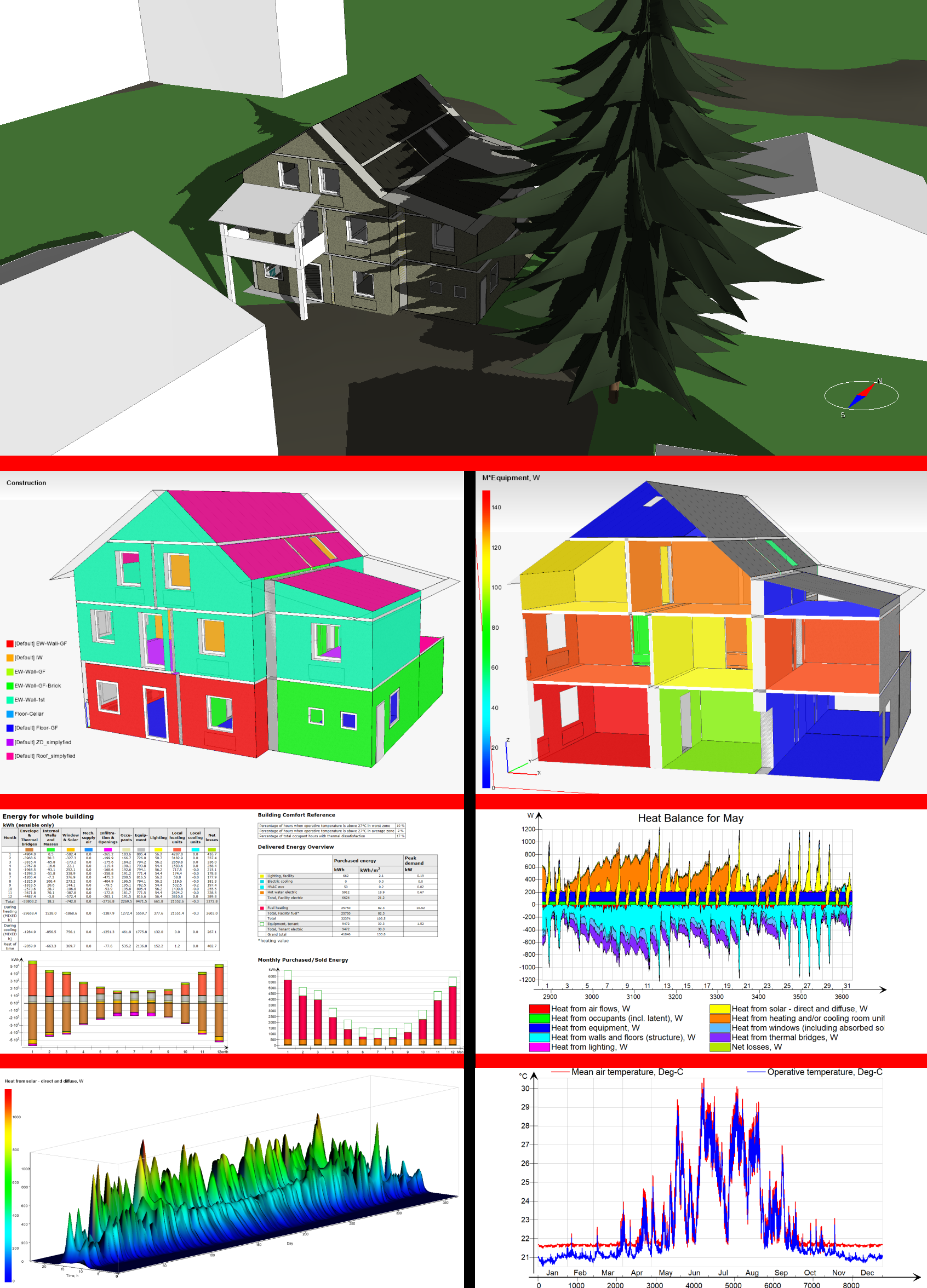
Building Performance Simulation (BPS) is the digital replication of a building's physical characteristics and operational behaviors using computer-based mathematical models. Grounded in fundamental physics and engineering, BPS aims to quantify crucial aspects of a building's performance, including thermal comfort, energy consumption, natural and artificial lighting, acoustics, and airflow. This sophisticated modeling allows architects, engineers, and building managers to predict how a structure will function under various conditions, optimize design choices, identify potential issues, and ensure compliance with energy codes and sustainability standards. The field encompasses specialized tools for thermal, lighting, acoustic, and airflow analysis, forming a critical component of modern, data-driven building design and operation within the broader domain of scientific computing.
🎵 Origins & History
Building Performance Simulation (BPS) involves creating a digital model of a building, defining its geometry, materials, internal loads (occupants, equipment), and HVAC systems. This model is then subjected to simulated environmental conditions, such as hourly weather data from sources like EPW files, and internal operational schedules. Sophisticated numerical methods, often based on finite difference or finite element analysis, are employed to solve complex differential equations governing heat transfer, fluid dynamics, and radiative transfer. The software then outputs performance metrics, such as hourly energy use, peak loads, operative temperatures, daylight illuminance levels, and airflow rates, allowing for detailed analysis and comparison of design alternatives. This process is iterative, with designers refining the model based on simulation results.
⚙️ How It Works
BPS is instrumental in achieving green building certifications like LEED.
📊 Key Facts & Numbers
BPS has reshaped architectural and engineering design paradigms, shifting the focus from purely aesthetic or structural considerations to performance-driven outcomes. It has fostered a culture of evidence-based design, where decisions are informed by quantifiable data rather than intuition alone. The widespread adoption of BPS has also contributed to the growing demand for green buildings and sustainable urban development, influencing public perception and market trends. The ability to visualize and understand complex building physics has made BPS a powerful communication tool, helping clients and stakeholders grasp the implications of design choices. Its influence extends to policy-making, informing building energy codes and standards globally.
👥 Key People & Organizations
The current state of BPS is characterized by increasing integration with Building Information Modeling (BIM) workflows, enabling seamless data exchange between design and analysis tools. Cloud-based simulation platforms are gaining traction, offering greater accessibility and computational power. Advanced simulation techniques, such as Computational Fluid Dynamics (CFD) for detailed airflow analysis and daylight analysis for visual comfort, are becoming more commonplace. The rise of Artificial Intelligence (AI) and Machine Learning (ML) is also beginning to impact BPS, promising faster analysis, predictive maintenance, and optimized control strategies for operational buildings. The focus is increasingly shifting from upfront design analysis to continuous performance monitoring and optimization throughout a building's lifecycle.
🌍 Cultural Impact & Influence
A significant debate within BPS revolves around the trade-off between model complexity and computational cost versus accuracy and usability. There's also ongoing discussion about the standardization of simulation methodologies and the validation of software tools to ensure reliable and comparable results across different platforms. The integration of BPS with real-time building operational data (digital twins) presents challenges in data management, calibration, and ensuring the fidelity of the simulated environment against actual performance, leading to discussions on the appropriate level of detail for different applications.
⚡ Current State & Latest Developments
The future of BPS is poised for significant advancements, driven by the convergence of digital technologies. Expect tighter integration with IoT devices and building management systems (BMS) to create true, dynamic digital twins that continuously learn and adapt. AI and ML will likely automate many aspects of simulation setup, analysis, and optimization, making sophisticated performance prediction accessible to a broader range of professionals. The use of BPS will expand beyond new construction to encompass the vast existing building stock, with a focus on deep energy retrofits and decarbonization strategies. Furthermore, BPS will likely play a more prominent role in assessing the resilience of buildings to climate change impacts, such as extreme weather events.
🤔 Controversies & Debates
BPS finds extensive application across the entire building lifecycle. In the design phase, it's used to optimize building orientation, envelope design, window-to-wall ratios, and HVAC system selection to minimize energy consumption and maximize occupant comfort. During construction, simulations can help identify potential clashes or constructability issues. In operation, BPS models can be used for commissioning, fault detection, and optimizing control sequences for energy efficiency and occupant satisfaction. For existing buildings, BPS is crucial for evaluating retrofit options and predicting the impact of upgrades. It's also fundamental for compliance with energy codes and for achieving certifications like Energy Star and BREEAM.
🔮 Future Outlook & Predictions
The field of BPS is deeply intertwined with several other disciplines and technologies. Energy Modeling is a core component, focusing specifically on predicting energy consumption and costs. Computational Fluid Dynamics (CFD) offers a more detailed approach to airflow and ventilation analysis than traditional BPS tools. Daylight Simulation specifically addresses the impact of natural light on building interiors and occupant well-being. Building Information Modeling (BIM) provides the geometric and data framew
Key Facts
- Category
- technology
- Type
- topic