
Contents
Overview
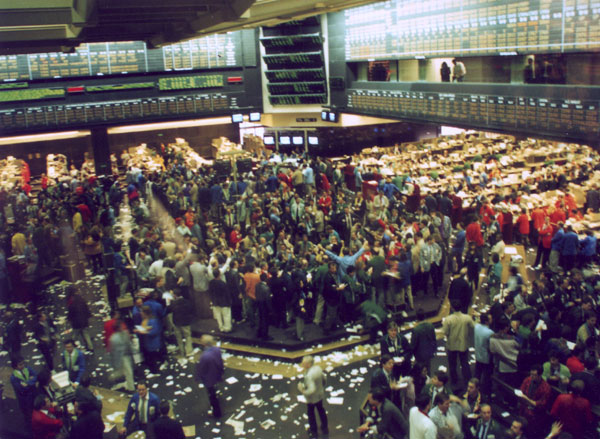
Commodity markets are global marketplaces where raw materials and primary products, rather than manufactured goods, are traded. These markets encompass a vast array of goods, from agricultural staples like wheat and soybeans to energy sources such as crude oil and natural gas, and precious and industrial metals like gold and copper. Historically, these markets served as crucial mechanisms for price discovery and risk management, particularly for producers like farmers and miners. Today, they are sophisticated ecosystems involving physical spot trading, alongside a complex web of derivatives like futures contracts, forwards, and options, primarily traded on exchanges such as the CME Group and ICE Group.
🎵 Origins & History
The genesis of commodity markets stretches back to ancient civilizations, where bartering and early forms of organized trade facilitated the exchange of essential goods like grain and livestock. The formalization of commodity trading accelerated with the development of futures contracts, a practice widely attributed to the Dutch in 17th century, particularly for tulips and spices. The 20th century saw the expansion into energy and metals markets, with exchanges like the New York Mercantile Exchange (NYMEX) becoming central to oil and gas trading, and the London Metal Exchange (LME) dominating industrial metals. This evolution transformed commodity markets from localized agricultural exchanges into global financial powerhouses.
⚙️ How It Works
Commodity markets operate through a dual system of physical and financial trading. Physical trading involves the actual buying and selling of the underlying commodity, often for immediate delivery (spot market) or a specified future date. Financial trading, however, centers on derivatives, primarily futures contracts. A futures contract is an agreement to buy or sell a specific commodity at a predetermined price on a future date. These contracts are standardized and traded on organized exchanges like the CME Group, which acts as a central counterparty, mitigating default risk. Traders use these instruments not only to hedge against price fluctuations but also for speculation, betting on future price movements. The pricing of these contracts is influenced by a complex interplay of supply and demand, geopolitical events, weather patterns, and macroeconomic indicators.
📊 Key Facts & Numbers
The CME Group, a leading exchange, facilitates trading in a vast array of grains, livestock, and dairy products, with futures and options contracts representing billions of bushels and head of cattle. The sheer liquidity and scale mean that even minor shifts in supply or demand can trigger significant price swings, impacting everything from consumer goods prices to national economies.
👥 Key People & Organizations
Key players in commodity markets range from individual producers and consumers to large financial institutions and speculative traders. Major exchanges like the CME Group, ICE Group, and LME provide the infrastructure for trading. Prominent financial institutions such as JPMorgan Chase, Goldman Sachs, and Morgan Stanley are deeply involved, offering trading, hedging, and investment services. Large trading houses like Glencore and Vitol physically trade and transport vast quantities of commodities. Influential figures include Bruce Lavorgna, a veteran commodity trader and analyst, and Jim Rogers, a renowned investor known for his prescient calls on commodity cycles. Regulatory bodies like the Commodity Futures Trading Commission (CFTC) in the U.S. oversee these markets to ensure fairness and prevent manipulation.
🌍 Cultural Impact & Influence
Commodity markets exert a profound influence on global culture and daily life, often in ways consumers rarely consider. The price of coffee at your local cafe is directly influenced by futures trading on the ICE. Fluctuations in natural gas prices impact home heating bills and electricity costs. The availability and cost of copper affect the production of everything from smartphones to electric vehicles. Beyond direct economic impact, commodity booms and busts have shaped geopolitical landscapes, fueled industrial revolutions, and even led to social unrest. The speculative frenzy surrounding tulips in the 17th-century Netherlands, often cited as an early example of a speculative bubble, remains a cautionary tale about market psychology. The cultural resonance of commodities like gold as a store of value and symbol of wealth is deeply ingrained in human history.
⚡ Current State & Latest Developments
The current state of commodity markets is characterized by increasing volatility and the growing influence of macroeconomic factors. The rise of algorithmic trading and exchange-traded funds (ETFs) focused on commodities has introduced new layers of complexity and liquidity. Regulatory scrutiny remains high, with authorities like the CFTC actively monitoring markets for potential manipulation and ensuring systemic stability.
🤔 Controversies & Debates
Commodity markets are no strangers to controversy. A persistent debate revolves around the extent to which financial speculation in derivatives markets drives up the prices of essential goods, potentially harming consumers and exacerbating poverty, particularly in developing nations. Critics argue that excessive speculation can detach prices from underlying physical supply and demand fundamentals. Conversely, proponents contend that financial markets provide crucial liquidity and hedging tools that stabilize prices for producers. Another area of contention is market manipulation, with regulators constantly on guard against practices that distort prices. The environmental impact of commodity extraction, such as oil spills and deforestation for agriculture, also fuels ethical debates that increasingly influence investment decisions and regulatory frameworks.
🔮 Future Outlook & Predictions
The future of commodity markets is likely to be defined by the accelerating energy transition and the increasing integration of technology. Demand for metals essential for electric vehicles and renewable energy infrastructure, such as lithium, cobalt, and copper, is projected to surge, creating new trading opportunities and potential supply bottlenecks. The role of artificial intelligence and machine learning in price forecasting, risk management, and algorithmic trading is expected to expand dramatically. Furthermore, the development of digital commodities and blockchain technology could revolutionize trading by enhancing transparency and efficiency in settlement processes. Climate change itself will increasingly influence agricultural commodity yields and the availability of water resources, adding further layers of complexity and volatility.
💡 Practical Applications
Commodity markets are fundamental to the global economy, underpinning countless industries. Producers, such as farmers and mining companies, use futures markets to lock in prices for their output, ensuring predictable income. Consumers, from food manufacturers to industrial giants, use these markets to hedge against rising input costs. Investors and hedge funds utilize commodity futures and ETFs for portfolio diversification and speculative gains. The price discovery function of these markets provides vital signals for resource allocation, guiding investment decisions in exploration, production, and infrastructure development worldwide. For
Key Facts
- Category
- markets
- Type
- topic