
Contents
Overview
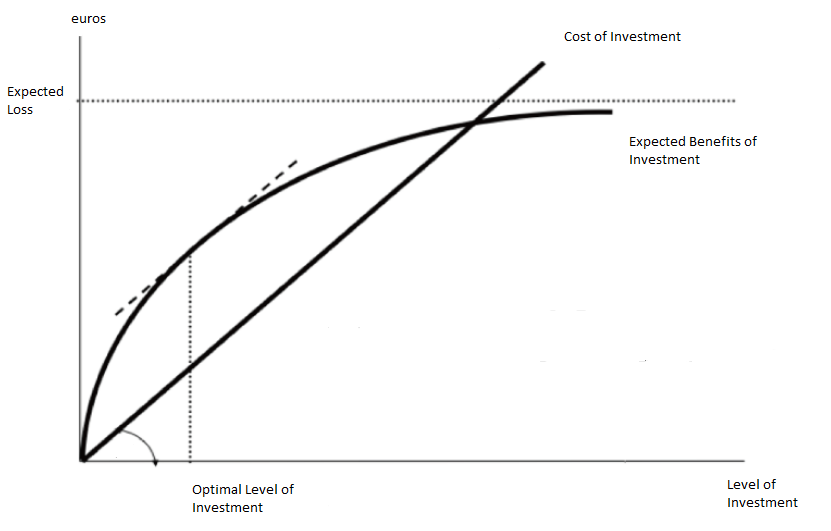
Cybersecurity investments represent the financial capital allocated by individuals, businesses, and governments to protect digital assets, data, and infrastructure from cyber threats. This spending encompasses a vast array of solutions, from hardware and software to personnel and training, aiming to mitigate the ever-growing risks of data breaches, ransomware attacks, and state-sponsored cyber warfare. The global cybersecurity market, valued at an estimated $270 billion in 2023, is projected to surge past $400 billion by 2027, underscoring the critical importance and escalating demand for robust digital defenses. These investments are driven by the increasing sophistication of attackers, the expanding attack surface due to cloud adoption and IoT proliferation, and stringent regulatory compliance requirements like the General Data Protection Regulation. The effectiveness of these investments is often debated, with frameworks like the Gordon-Loeb model attempting to quantify optimal spending levels by balancing the cost of security with the potential losses from breaches.
🎵 Origins & History
The concept of investing in digital protection traces its roots to the early days of computing. Early investments in digital protection were often reactive, addressing immediate vulnerabilities discovered in systems like ARPANET. The late 1990s and early 2000s saw a significant uptick in cybersecurity spending, spurred by high-profile attacks such as the Morris Worm in 1988 and the increasing prevalence of viruses like Melissa and ILOVEYOU in the late 1990s. Venture capital began to flow into nascent cybersecurity startups, recognizing the commercial potential of protecting businesses from these emerging threats. Companies like Symantec and McAfee emerged as early leaders, building foundational security products and services that laid the groundwork for today's multi-billion dollar industry. The shift from on-premise infrastructure to cloud computing in the 2010s further accelerated investment, as organizations grappled with securing distributed environments.
⚙️ How It Works
Cybersecurity investments function by allocating capital across a spectrum of protective measures. This includes purchasing firewall hardware and intrusion detection systems (IDS), subscribing to cloud security platforms, and deploying endpoint detection and response (EDR) solutions. A significant portion also goes towards human capital: hiring security analysts, penetration testers, and CISOs, as well as investing in continuous training and awareness programs for all employees. Furthermore, investments cover incident response planning and execution, threat intelligence services, and SIEM systems for monitoring and analysis. The Gordon-Loeb model offers a theoretical framework for optimizing these investments, suggesting that optimal security spending should not exceed 37% of the potential loss from a breach, though real-world application often deviates from this ideal.
📊 Key Facts & Numbers
The global cybersecurity market is a colossal and rapidly expanding sector. In 2023, it was valued at approximately $270 billion, with projections indicating a surge to over $400 billion by 2027, representing a compound annual growth rate (CAGR) of around 10-12%. Ransomware attacks alone are estimated to cost the global economy over $265 billion annually as of 2023. The average cost of a data breach in 2023 reached a record $4.45 million, a 15.3% increase over two years, according to IBM's Cost of a Data Breach Report. Cloud security spending is a major driver, projected to reach $100 billion by 2025. The United States accounts for the largest share of cybersecurity spending, estimated at over 40% of the global market, followed by Europe and Asia-Pacific.
👥 Key People & Organizations
Numerous individuals and organizations are pivotal in shaping cybersecurity investments. Microsoft and Google are major players, not only as providers of security solutions but also as significant investors in their own defenses and in acquiring promising startups. Palo Alto Networks, CrowdStrike, and Fortinet are leading cybersecurity vendors whose market performance directly reflects investment trends. Venture capital firms like Sequoia Capital, Andreessen Horowitz, and Accel are crucial in funding innovation, channeling billions into emerging cybersecurity companies. Government agencies, such as the U.S. Cybersecurity and Infrastructure Security Agency (CISA) and the U.S. National Security Agency (NSA), also drive significant investment through procurement and research initiatives. Amit Yoran, CEO of CISA, has been a vocal advocate for increased public-private investment in critical infrastructure security.
🌍 Cultural Impact & Influence
Cybersecurity investments have profoundly reshaped the business and cultural landscape. The constant threat of breaches has fostered a culture of vigilance, making security a boardroom-level concern rather than just an IT issue. This has led to the proliferation of cybersecurity certifications like CISSP and CompTIA Security+, creating a specialized job market. The media often sensationalizes cyber threats, influencing public perception and driving demand for consumer-grade security products. Furthermore, the rise of bug bounty programs, pioneered by companies like HackerOne and Bugcrowd, has created a new paradigm for incentivizing ethical hacking and improving product security through external investment in vulnerability discovery. The very notion of privacy has been redefined by the constant need for digital security measures.
⚡ Current State & Latest Developments
The current cybersecurity investment landscape is characterized by rapid evolution and a focus on emerging threats. Generative AI is a major area of investment, with both defenders and attackers leveraging its capabilities. Companies are investing heavily in AI-powered threat detection and response platforms, while simultaneously worrying about AI-generated phishing campaigns and sophisticated malware. The Internet of Things (IoT) security market is also booming, as the sheer volume of connected devices creates new vulnerabilities. Geopolitical tensions are fueling increased government spending on national cybersecurity capabilities and critical infrastructure protection, with significant investments being made in zero-trust architectures and cloud-native security solutions. The ongoing war in Ukraine has highlighted the importance of cyber resilience, prompting further investment in defensive and offensive cyber capabilities.
🤔 Controversies & Debates
Significant controversies surround cybersecurity investments. A primary debate centers on the Gordon-Loeb model's applicability in today's complex threat environment; critics argue it oversimplifies the multifaceted nature of cyber risk and may lead to underinvestment. Another point of contention is the effectiveness of spending versus the actual reduction in breaches. Many organizations spend vast sums yet still suffer breaches, leading to questions about resource allocation, vendor efficacy, and the inherent difficulty of achieving perfect security. The ethics of investing in offensive cyber capabilities, often termed 'cyber weapons,' by both governments and private firms, is also a major concern, raising fears of escalation and misuse. Furthermore, the consolidation of the cybersecurity market through acquisitions by large players like Microsoft and Broadcom raises concerns about competition and innovation.
🔮 Future Outlook & Predictions
The future of cybersecurity investments will likely be shaped by an arms race between attackers and defenders, heavily influenced by AI and quantum computing. We can expect continued exponential growth in spending as AI becomes more sophisticated, enabling both advanced threat detection and novel attack vectors. Investments in quantum-resistant cryptography will become critical as quantum computers mature, posing a threat to current encryption standards. The IoT and 5G will expand the attack surface dramatically, necessitating new security paradigms and significant investment in securing these distributed environments. The regulatory landscape will also continue to evolve, with stricter data protection laws and mandatory breach notification requirements driving further compliance-focused spending.
Key Facts
- Category
- technology
- Type
- topic