
Contents
Overview
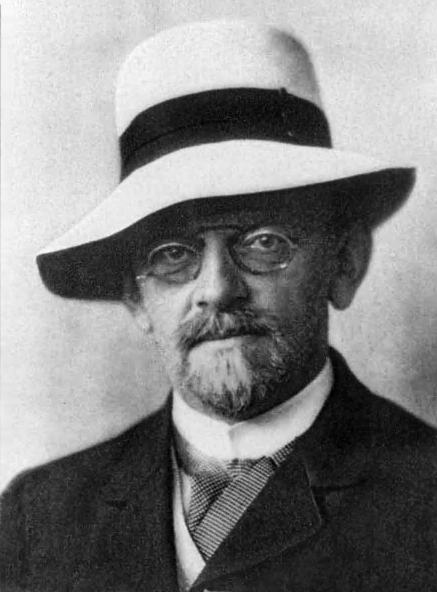
David Hilbert's intellectual journey began in Königsberg, Prussia (now Kaliningrad, Russia), where he was born on January 23, 1862. Educated at the Collegium Fridericianum and later the University of Königsberg, he was deeply influenced by his professors, particularly Ferdinand von Lindemann, who had famously proved the transcendence of pi. Hilbert's early work focused on invariant theory, a field he largely revolutionized, but his curiosity soon expanded to encompass algebraic number theory and the foundations of geometry. By the late 1890s, he was already a leading figure, appointed to the University of Göttingen in 1895, a position that cemented his status as the intellectual center of mathematical gravity for decades. His 1899 book, Grundlagen der Geometrie (Foundations of Geometry), provided a rigorous axiomatic framework for Euclidean geometry, setting a new standard for mathematical exposition and proof.
⚙️ How It Works
Hilbert's approach to mathematics was characterized by a profound belief in the power of axiomatization and formal systems. He sought to establish a secure, consistent, and complete foundation for all of mathematics, a grand project that became known as Hilbert's program. This involved defining mathematical objects and their relationships through a minimal set of axioms and then proving all mathematical truths derivable from these axioms using formal logical rules. His work on Hilbert spaces, infinite-dimensional vector spaces, provided the essential mathematical framework for Werner Heisenberg's and Erwin Schrödinger's formulations of quantum mechanics. These spaces, equipped with an inner product, allowed for the rigorous treatment of functions as vectors, enabling the development of spectral theory for operators, which is fundamental to understanding quantum phenomena.
📊 Key Facts & Numbers
Hilbert was a prolific mathematician, publishing over 100 papers and books during his career. His 1900 address to the International Congress of Mathematicians in Paris presented a list of 23 unsolved problems, which proved to be incredibly influential, shaping the research agenda for much of the 20th century; at least 10 of these problems were fully solved by 1970, and several others saw partial solutions. Hilbert spaces, a cornerstone of functional analysis, are now ubiquitous in fields like signal processing and machine learning, with applications ranging from Wikipedia's image compression algorithms to advanced AI models. His work on integral equations, developed with Erhard Schmidt, laid the groundwork for modern analysis and has been applied in areas as diverse as fluid dynamics and economic modeling. The number of mathematicians who studied under him or were directly influenced by his work is estimated to be in the hundreds, forming a vast intellectual lineage.
👥 Key People & Organizations
Beyond his own groundbreaking research, Hilbert cultivated a generation of mathematicians at the University of Göttingen, which became a global hub for mathematical study. Key figures who studied or worked with him include Hermann Weyl, who extended Hilbert's ideas into physics and topology; John von Neumann, a prodigy who made monumental contributions to logic, quantum mechanics, and computing; Emmy Noether, whose abstract algebra revolutionized the field and whose famous theorem connects symmetries to conservation laws; and Albert Einstein, with whom Hilbert shared a mutual respect and engaged in discussions about the foundations of physics. The University of Göttingen itself was a crucial institution, providing the environment and resources for Hilbert's expansive research program and attracting top talent from around the world.
🌍 Cultural Impact & Influence
Hilbert's influence extends far beyond the confines of academic mathematics. His axiomatic approach to geometry, detailed in Foundations of Geometry, provided a model for rigorous scientific reasoning and inspired similar axiomatic treatments in other disciplines. The development of Hilbert spaces was absolutely critical for the birth of quantum mechanics in the 1920s, providing the mathematical language to describe the probabilistic nature of subatomic particles. His famous 1900 problems spurred research in areas like computability theory, analytic number theory, and differential geometry, many of which remain active areas of investigation today. The very concept of a formal system and the quest for mathematical certainty became central themes in the philosophy of mathematics, debated by thinkers like Bertrand Russell and Ludwig Wittgenstein.
⚡ Current State & Latest Developments
While Hilbert's era of direct mathematical output has passed, his legacy is continuously re-examined and applied. The Hilbert spaces he conceptualized remain indispensable in quantum physics, forming the bedrock of quantum computing research and the development of new quantum algorithms. His 1900 problems continue to inspire mathematicians; for instance, the Riemann Hypothesis, one of his most famous problems, remains unsolved and is a major focus of contemporary number theory, with a $1 million prize offered by the Clay Mathematics Institute for its proof. Furthermore, the formal systems and proof theory he pioneered are foundational to modern computer science, particularly in areas like automated theorem proving and formal verification of software and hardware, as seen in projects at Microsoft Research and Google AI.
🤔 Controversies & Debates
The most significant controversy surrounding Hilbert's work emerged in the 1930s with Kurt Gödel's incompleteness theorems. Gödel proved that for any consistent formal axiomatic system powerful enough to describe arithmetic, there exist true statements that cannot be proven within that system. This directly challenged Hilbert's program for a complete and consistent foundation for all mathematics, demonstrating that absolute certainty and completeness, as Hilbert envisioned, were unattainable. This led to a major re-evaluation of the goals of mathematical logic and the philosophy of mathematics, shifting focus from absolute certainty to understanding the limits and capabilities of formal systems. Another debate revolves around the interpretation of his problems; while many were solved, some, like the Continuum Hypothesis, have been shown to be independent of standard set theory, meaning they can neither be proven nor disproven within the ZFC axioms.
🔮 Future Outlook & Predictions
The future of Hilbert's legacy lies in the ongoing exploration of the limits of formal systems and the application of his foundational ideas. Gödel's theorems, while dismantling Hilbert's original program, opened up new avenues in computability theory and the study of undecidability, which are increasingly relevant in the age of AI and complex computational systems. The pursuit of formal verification, a direct descendant of Hilbert's formalist program, is becoming critical for ensuring the reliability of software and hardware in safety-critical applications like autonomous vehicles and medical devices. Furthermore, the philosophical implications of Gödel's work continue to be debated, influencing discussions on the nature of knowledge, truth, and the potential for artificial general intelligence to ever achieve true understanding or consciousness.
💡 Practical Applications
Hilbert's work has direct practical applications across numerous scientific and technological domains. Hilbert spaces are the mathematical bedrock of quantum mechanics, essential for understanding and developing technologies like lasers, transistors, and the emerging field of quantum computing. His research in integral equations is applied in fields such as image processing, signal analysis, and solving differential equations in physics and engineering. The formal systems and proof theory he championed are fundamental to computer science, underpinning areas like automated theorem proving, compiler design, and the formal verification of software and hardware, ensuring the reliability of systems used by companies like IBM and Intel. His axiomatic approach to geometry also finds applications in computer graphics and [[computational-geometry|co
Key Facts
- Category
- philosophy
- Type
- topic