
Contents
- 🎵 Origins & Early Germania
- ⚙️ Empires and Fragmentation
- 📊 Key Milestones & Numbers
- 👥 Key Figures & Movements
- 🌍 Cultural Resonance & Influence
- ⚡ Modern Germany: Division and Reunification
- 🤔 Controversies and Debates
- 🔮 Future Trajectories
- 💡 Practical Applications of Historical Study
- 📚 Related Topics & Deeper Reading
- References
Overview
German history is a sprawling narrative of tribal confederations, imperial ambitions, devastating wars, and profound ideological shifts. Its origins can be traced to the Germanic tribes inhabiting Central Europe, a region first broadly defined as 'Germania' by the Romans. The establishment of the Holy Roman Empire in 962 marked a significant early attempt at political unification, though it was a decentralized entity for much of its existence. Centuries of fragmentation, punctuated by periods of cultural and economic flourishing like the Hanseatic League, gave way to the rise of Prussia and the eventual unification of Germany under Otto von Bismarck in 1871. The 20th century brought cataclysmic events: the trauma of World War I, the rise and fall of the Nazi regime and its horrific Holocaust, followed by decades of division into West and East Germany during the Cold War. The fall of the Berlin Wall in 1989 and subsequent reunification in 1990 ushered in the modern era of Germany as a central player in the European Union and a global economic force.
🎵 Origins & Early Germania
The very concept of 'Germany' begins not with a unified state, but with the Roman designation 'Germania' for the vast, largely unconquered territories east of the Rhine and north of the Danube. Early inhabitants were a mosaic of Germanic tribes like the Cherusci, whose decisive victory over three Roman legions in the Battle of the Teutoburg Forest in AD 9 famously halted Roman expansion into the region. This resistance, documented by historians like Tacitus in his work Germania, laid the groundwork for a distinct cultural and linguistic identity that would persist through centuries of migration and conflict, including the Völkerwanderung (Migration Period) following the decline of the Western Roman Empire.
⚙️ Empires and Fragmentation
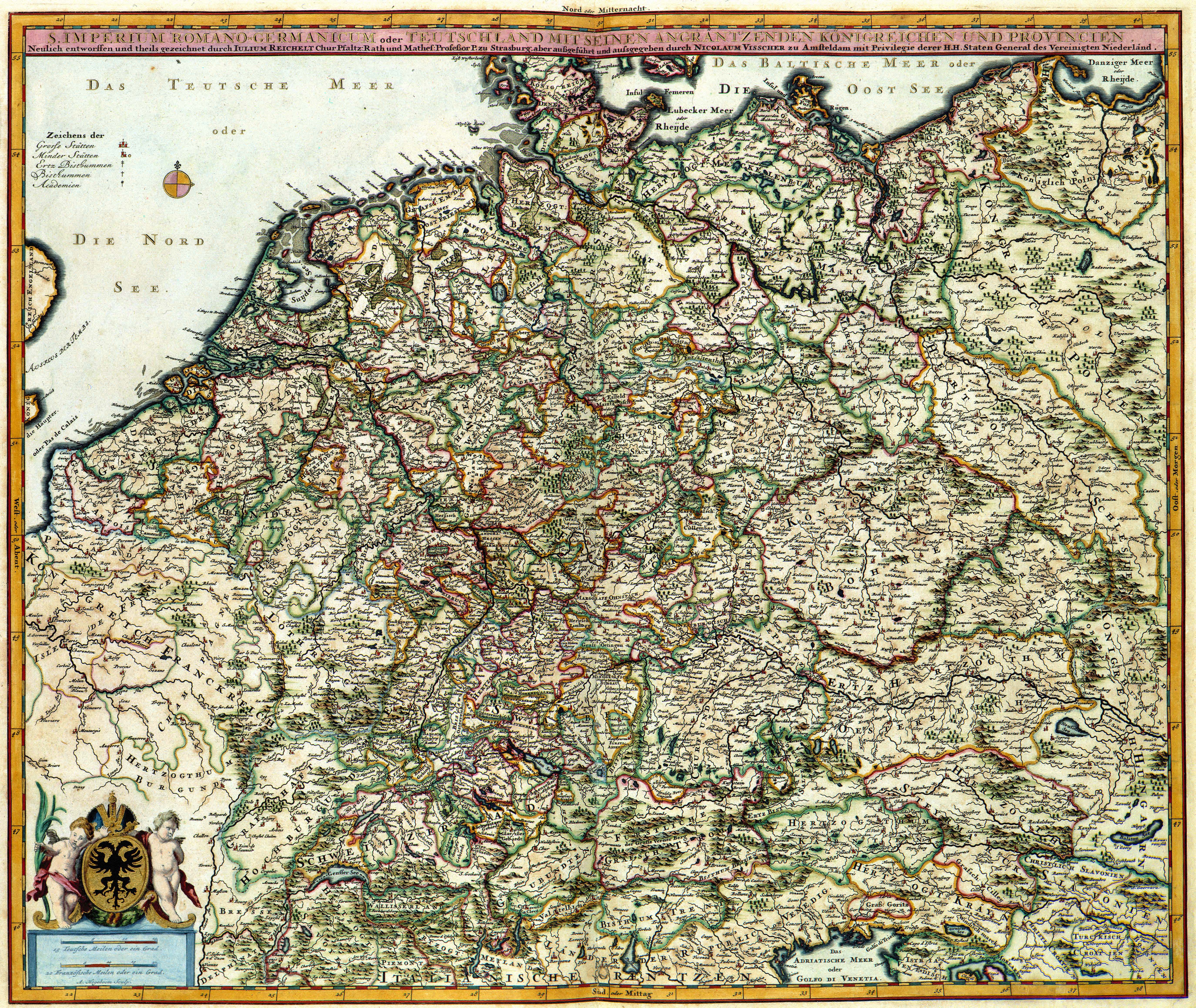
Following the collapse of Roman authority, the region saw the rise of powerful kingdoms, most notably the Frankish Empire. The Treaty of Verdun in 843, dividing the empire among Charlemagne's grandsons, created East Francia, a direct precursor to the Kingdom of Germany. This entity would evolve into the Holy Roman Empire, a complex, often decentralized political structure that endured for nearly a millennium, from its formal inception under Otto I in 962 until its dissolution by Napoleon in 1806. This era was characterized by the power struggles between emperors and princes, the influence of the Catholic Church, and the burgeoning economic power of leagues like the Hanseatic League, which dominated Baltic and North Sea trade from the 13th to 17th centuries.
📊 Key Milestones & Numbers
The journey from fragmented territories to a unified nation is marked by staggering figures. The Holy Roman Empire, at its peak, encompassed over 1,000 territories, though its actual centralized power was often minimal. The Thirty Years' War (1618-1648) devastated regions, with some areas losing up to 60% of their population. Prussia's rise, culminating in its dominance over the German states, saw its military expenditure grow from approximately 2.5 million thalers in 1740 to over 15 million thalers by 1786. The unification of Germany in 1871 created an empire with a population of over 41 million, rapidly industrializing to become Europe's leading economic power by 1914, producing roughly 15% of the world's manufactured goods. The division of Germany post-WWII saw two states emerge: West Germany (Federal Republic of Germany) with a GDP of $55 billion in 1950, and East Germany (German Democratic Republic) with a GDP of $20 billion. Reunification in 1990 was a monumental economic undertaking, with initial estimates for integration costs ranging from 500 billion to over 1 trillion Deutsche Mark.
👥 Key Figures & Movements
Key figures and movements have profoundly shaped German history. Martin Luther's Protestant Reformation in the 16th century fractured religious unity and sparked centuries of conflict, fundamentally altering the political and social landscape. The Enlightenment fostered intellectual giants like Immanuel Kant and Johann Wolfgang von Goethe. The 19th century saw the rise of Otto von Bismarck, the 'Iron Chancellor' who masterminded German unification through calculated diplomacy and warfare. The 20th century is indelibly marked by the rise of Adolf Hitler and the Nazi Party, whose totalitarian ideology led to World War II and the systematic genocide of approximately six million Jews during the Holocaust. Post-war, figures like Konrad Adenauer guided West Germany's reconstruction and integration into Western alliances, while Willy Brandt's Ostpolitik sought détente with Eastern Bloc nations.
🌍 Cultural Resonance & Influence
German history resonates deeply within global culture and intellectual thought. The philosophical traditions of German Idealism, with thinkers like Hegel and Nietzsche, have influenced countless fields. German contributions to music, from Bach and Beethoven to the avant-garde movements of the 20th century, are foundational. The literary canon, including authors like Thomas Mann and Franz Kafka (though writing in German, he was a subject of the Austro-Hungarian Empire), offers profound insights into the human condition. The very concept of historical scholarship, with rigorous methodologies and critical analysis, owes much to German historians and thinkers who established new standards for the discipline in the 19th century.
⚡ Modern Germany: Division and Reunification
The post-World War II era saw Germany bifurcated into the Federal Republic of Germany (West Germany) and the German Democratic Republic (East Germany), a stark geopolitical division during the Cold War. West Germany, aligned with NATO and the EEC, experienced the Wirtschaftswunder (economic miracle), becoming a stable democracy and economic powerhouse. East Germany, under Soviet influence, developed a centrally planned economy and a one-party state. The fall of the Berlin Wall on November 9, 1989, a pivotal moment in 20th-century history, paved the way for German reunification on October 3, 1990. Since then, Germany has re-emerged as a leading nation within the European Union, grappling with the economic and social integration of the former East and navigating its role in a complex global landscape.
🤔 Controversies and Debates
Few historical narratives are as fraught with controversy as that of Germany. The legacy of the Nazi regime and the Holocaust remains a subject of intense scrutiny, memorialization, and debate, particularly concerning collective guilt, remembrance, and the prevention of future atrocities. The process of German unification in 1990 is also debated, with ongoing discussions about the economic disparities between East and West, and the cultural integration challenges. Furthermore, the historical narratives of German colonialism, particularly in Africa and the Pacific, are increasingly being re-examined, challenging earlier, more sanitized accounts and demanding greater accountability for colonial violence and exploitation.
🔮 Future Trajectories
The future of German history is intrinsically linked to its role in Europe and the world. As a leading member of the European Union, Germany's domestic policies and international stance will continue to shape the continent's trajectory. Challenges include managing demographic shifts, addressing climate change, and adapting to a rapidly evolving geopolitical order. The ongoing process of grappling with its past, particularly the legacy of Nazism and colonialism, will undoubtedly continue to inform its national identity and its engagement with global affairs. The rise of new political movements and the shifting sands of international relations suggest that Germany's historical narrative is far from concluded, with new chapters yet to be written.
💡 Practical Applications of Historical Study
Studying German history offers profound insights applicable across numerous fields. The rise and fall of empires, from the Holy Roman Empire to the German Empire, provide case studies in state-building, governance, and the dynamics of power. The economic transformations, including the Wirtschaftswunder and the challenges of reunification, offer valuable lessons for economic development and integration. The philosophical and cultural movements originating in Germany have shaped global thought, art, and literature, providing frameworks for understanding human experience. Furthermore, the meticulous documentation and analysis of events like the Holocaust serve as critical lessons in ethics, human rights, and the dangers of unchecked authoritarianism, informing contemporary efforts in genocide prevention and historical justice.
Key Facts
- Category
- history
- Type
- topic