
Contents
Overview
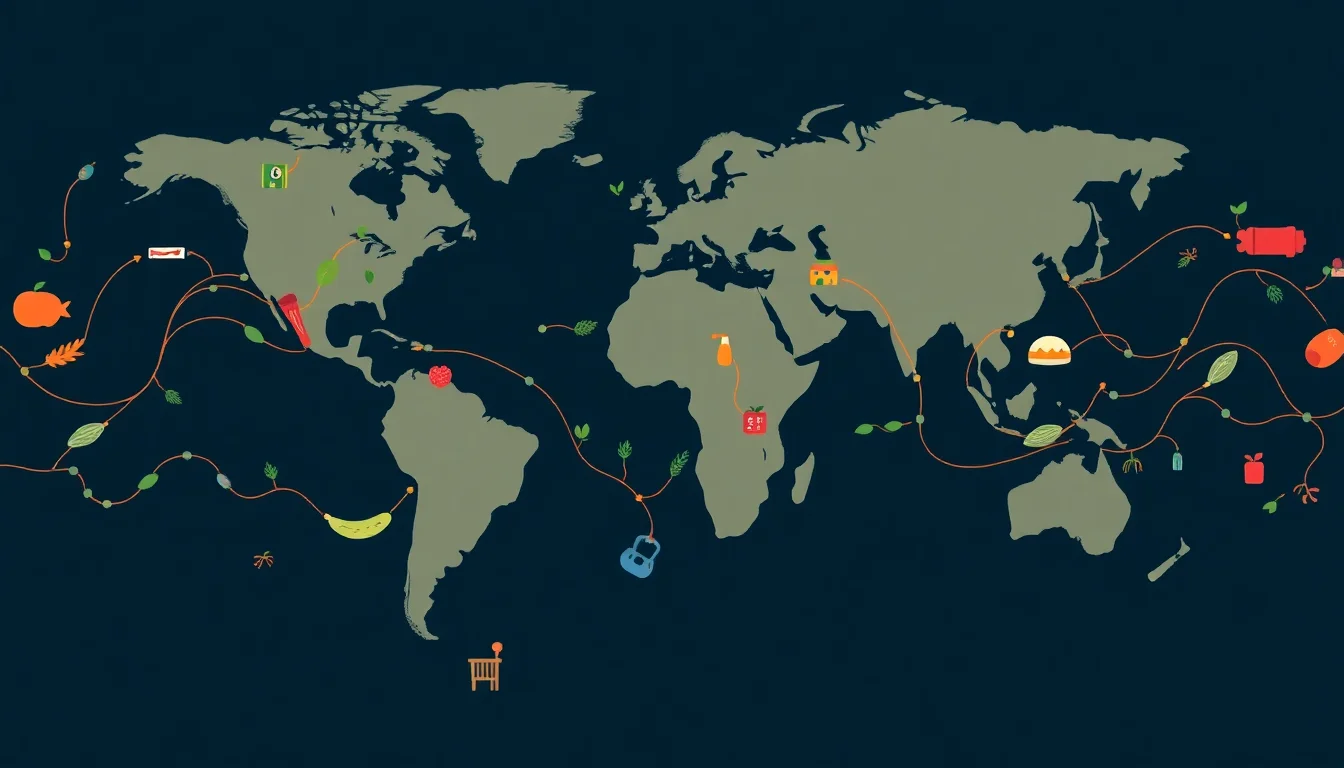
Global food supply chains represent the complex network of activities involved in producing, processing, distributing, and consuming food across international borders. These chains encompass everything from agricultural production on vast monocultures to the intricate logistics of shipping, refrigeration, and retail, ultimately delivering sustenance to billions. The sheer scale is staggering: approximately 4 billion metric tons of food are produced annually, with a significant portion traversing continents. These systems are critical for global food security but are also highly vulnerable to disruptions, from climate change and geopolitical conflicts to pandemics and economic shocks. Understanding their mechanics, vulnerabilities, and the forces shaping them is paramount to addressing hunger, sustainability, and the future of food.
🎵 Origins & History
The genesis of global food supply chains can be traced back to the earliest forms of trade, but their modern iteration truly began with the advent of industrial agriculture and advancements in transportation technology during the 19th and 20th centuries. The post-World War II era saw a dramatic acceleration, driven by the Green Revolution, which boosted crop yields through new technologies and fertilizers. These developments facilitated the consolidation of agricultural production and the creation of highly integrated, international networks designed for efficiency and scale, often at the expense of local food systems.
⚙️ How It Works
At its core, a global food supply chain is a multi-stage process. It begins with primary production: farming, fishing, and livestock rearing, often concentrated in regions with favorable climates and labor costs. This raw produce is then transported to processing facilities, where it might be transformed into packaged goods, frozen, canned, or refined. Next, it enters the distribution phase, involving warehousing, logistics, and transportation via ships, planes, trucks, and trains. Finally, food reaches consumers through wholesale and retail channels, including supermarkets like Walmart and online grocers, completing a journey that can span thousands of miles and involve dozens of intermediaries.
📊 Key Facts & Numbers
The sheer magnitude of global food movement is staggering. Over 1.5 billion hectares of land are dedicated to crop production worldwide, yielding approximately 4 billion metric tons of cereals annually. The international trade in food and agricultural products exceeded $1.7 trillion USD in 2022, according to the WTO. Refrigerated shipping alone accounts for a significant portion of global maritime trade, with an estimated 100 million refrigerated containers in use. The average distance food travels from farm to plate in developed nations can be as high as 1,500 miles (2,400 km), a figure that highlights the extensive logistical networks involved. Furthermore, an estimated one-third of all food produced globally is lost or wasted, amounting to roughly 1.3 billion tons per year, a statistic that underscores the inefficiencies within these chains.
👥 Key People & Organizations
Key players in global food supply chains are diverse and powerful. Multinational agribusiness giants like Monsanto (now part of Bayer) and Archer Daniels Midland dominate seed, fertilizer, and commodity trading. Major food processors such as Nestle and Unilever transform raw ingredients into consumer products. Logistics and shipping companies like CMA CGM and Hapag-Lloyd are indispensable for moving goods. Retail behemoths like Carrefour and Alibaba Group control access to consumers. International organizations like the FAO and the WFP play crucial roles in monitoring, regulating, and intervening in these systems, particularly during crises.
🌍 Cultural Impact & Influence
Global food supply chains have profoundly shaped human diets, economies, and cultures. They have enabled unprecedented dietary diversity in many parts of the world, making exotic fruits and out-of-season vegetables available year-round in urban centers. However, this globalization has also led to the homogenization of diets, with a few staple crops like wheat, rice, and corn dominating global production. The economic influence is immense, with agriculture and food processing being major contributors to the GDP of many nations. Culturally, the chains have influenced migration patterns, labor practices, and even the perception of food as a commodity rather than a cultural artifact, a shift that has been critically examined by scholars like Michael Pollan.
⚡ Current State & Latest Developments
The current state of global food supply chains is one of heightened volatility and adaptation. The war in Ukraine in 2022, a major breadbasket for the world, reportedly severely disrupted grain and fertilizer exports, sending shockwaves through global markets and contributing to food inflation. Climate change is increasingly impacting production through extreme weather events, droughts, and floods, affecting yields in key agricultural regions. Furthermore, the lingering effects of the COVID-19 pandemic exposed fragilities in labor availability, transportation, and processing capacity. Companies are now investing heavily in supply chain resilience, exploring technologies like blockchain for traceability and AI for demand forecasting, as seen with initiatives from IBM Food Trust.
🤔 Controversies & Debates
The controversies surrounding global food supply chains are numerous and deeply contested. Critics point to the environmental toll of industrial agriculture, including deforestation, water pollution from agricultural runoff, and significant greenhouse gas emissions, particularly from livestock and transportation. Labor exploitation, especially in developing countries where much of the world's food is produced, remains a persistent issue, with low wages and poor working conditions common. The consolidation of power among a few large corporations raises concerns about market manipulation and reduced farmer autonomy. The ethical implications of genetically modified organisms (GMOs) and the widespread use of pesticides, championed by companies like Syngenta, are also subjects of intense debate.
🔮 Future Outlook & Predictions
The future of global food supply chains is likely to be defined by a push for greater resilience, sustainability, and technological integration. We can expect increased investment in vertical farming and precision agriculture technologies to optimize resource use and reduce environmental impact. The development of alternative proteins, such as lab-grown meat and plant-based alternatives from companies like Beyond Meat, could significantly alter demand for traditional livestock products. Furthermore, greater emphasis will be placed on circular economy principles, aiming to reduce food waste through improved logistics, upcycling, and innovative packaging solutions. Geopolitical shifts may also lead to regionalization of some supply chains, reducing reliance on long-distance transport and fostering greater local food security.
💡 Practical Applications
Global food supply chains are not just abstract systems; they have tangible applications that impact daily life. For consumers, understanding these chains can inform purchasing decisions, leading to choices that support sustainable or ethical producers. For businesses, optimizing these chains is crucial for profitability and market access, driving innovation in logistics, food processing, and retail technology. Governments and international bodies utilize this knowledge to formulate agricultural policies, manage food reserves, and respond to humanitarian crises, as exemplified by the WFP's efforts in famine-stricken regions. The application of data analytics and AI by firms like Palantir Technologies is increasingly used to predict demand, manage inventory, and mitigate risks across these complex networks.
Key Facts
- Category
- systems
- Type
- topic