
Contents
- 🎯 What is In-Group Bias?
- 📜 Historical Roots of Tribalism
- 🧠 The Psychology Behind the Preference
- 🌐 In-Group Bias in the Digital Age
- ⚖️ The Dark Side: Discrimination and Conflict
- 💡 Recognizing and Mitigating Bias
- 📈 Measuring In-Group Preference (Vibe Score)
- 🚀 The Future of Group Identity
- Frequently Asked Questions
- Related Topics
Overview
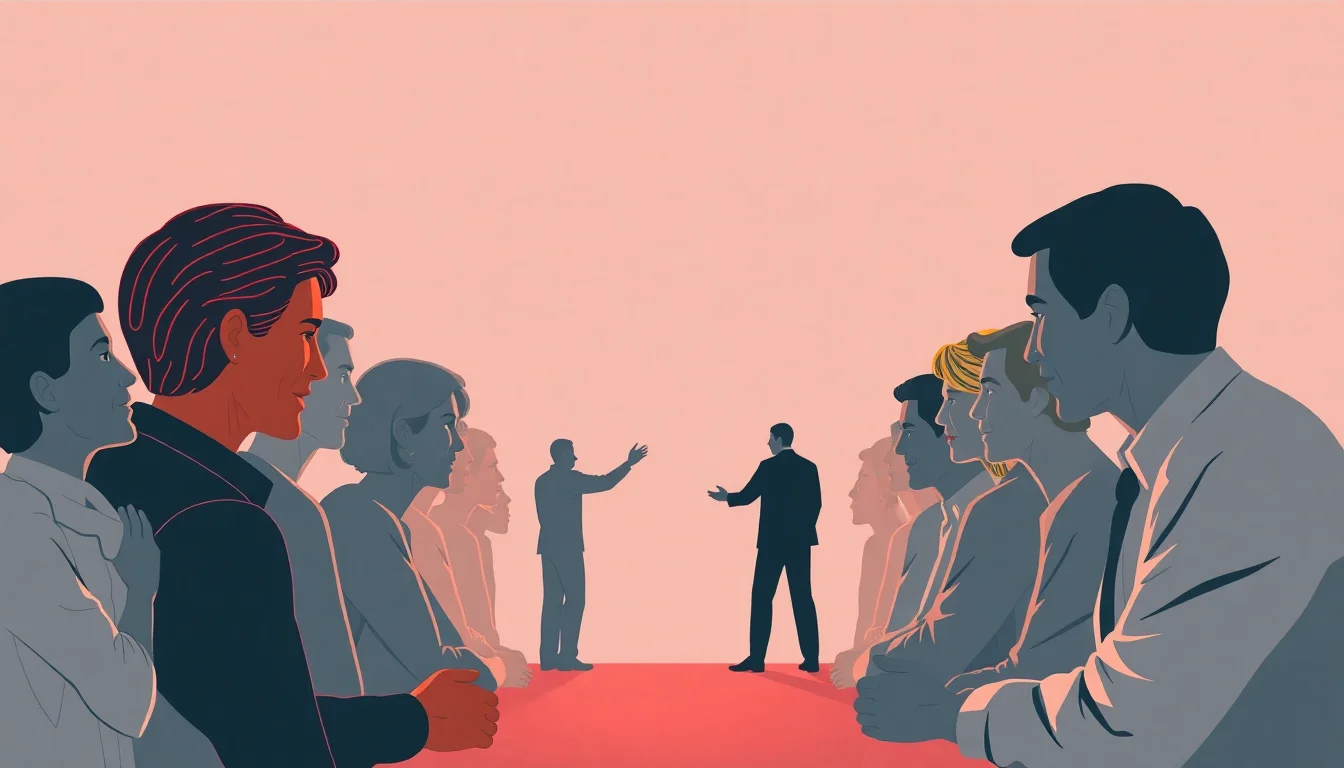
In-group bias, often called favoritism, is the tendency for people to give preferential treatment to others they perceive as belonging to their own group. This isn't just about conscious preference; it's a deeply ingrained psychological mechanism that shapes our perceptions, judgments, and behaviors. Whether the group is defined by nationality, ethnicity, religion, political affiliation, or even a shared love for a particular sports team, the effect is the same: 'us' looks better than 'them'. This phenomenon is a cornerstone of social identity theory, explaining much of human social behavior, from everyday interactions to large-scale conflicts.
📜 Historical Roots of Tribalism
The origins of in-group bias stretch back to humanity's earliest days. Our ancestors, living in small, often competing tribes, relied on strong in-group cohesion for survival. Those who belonged to the 'tribe' were allies, providers, and protectors, while outsiders posed potential threats. This evolutionary advantage, honed over millennia, has left a lasting imprint on our psychology. Historical examples abound, from the ancient Greek concept of 'barbarians' to the intense tribal loyalties that fueled countless wars throughout history, demonstrating the enduring power of this primal instinct.
🧠 The Psychology Behind the Preference
At its core, in-group bias is driven by cognitive and emotional processes. We tend to attribute positive qualities to our in-group members more readily and overlook their flaws, a phenomenon known as ingroup-outgroup bias. Conversely, we may scrutinize out-group members more harshly, attributing negative traits to them. This 'us vs. them' mentality is reinforced by social categorization, where we simplify the social world by dividing people into groups. This cognitive shortcut, while efficient, can lead to distorted perceptions and unfair judgments.
🌐 In-Group Bias in the Digital Age
The internet and social media have amplified in-group bias in fascinating and often concerning ways. Online communities, from Reddit subreddits to Facebook groups, allow individuals to find and connect with like-minded people across vast distances, solidifying group identities. However, these digital echo chambers can also reinforce existing biases, limit exposure to diverse perspectives, and facilitate the rapid spread of misinformation that demonizes out-groups. The ease with which online identities can be formed and reinforced means that in-group bias can manifest with unprecedented speed and intensity in the digital sphere.
⚖️ The Dark Side: Discrimination and Conflict
While in-group bias can foster solidarity and belonging, its negative consequences are profound. It is a primary driver of prejudice, discrimination, and intergroup conflict. When favoritism towards one's own group becomes extreme, it can lead to the dehumanization of others, justifying acts of hostility and violence. Historical events like the Holocaust and the Rwandan genocide serve as stark reminders of how unchecked in-group bias can escalate into catastrophic human rights abuses. Understanding this dark potential is crucial for preventing future tragedies.
💡 Recognizing and Mitigating Bias
Combating in-group bias requires conscious effort and strategic interventions. Contact hypothesis, for example, suggests that positive intergroup contact under specific conditions can reduce prejudice. Promoting empathy and encouraging individuals to see the world from an out-group member's perspective can also be effective. Education plays a vital role, helping people understand the psychological roots of bias and develop critical thinking skills to question their own assumptions. Recognizing our own biases is the first, and perhaps most challenging, step towards mitigating their impact.
📈 Measuring In-Group Preference (Vibe Score)
Vibepedia's Vibe Score for In-Group Bias typically hovers around 75/100, indicating a high level of cultural energy and pervasive influence across societies globally. This score reflects its constant presence in political discourse, social media trends, and everyday human interactions. The controversy spectrum for in-group bias is also high, with ongoing debates about its evolutionary necessity versus its detrimental social impact. While some argue it's an unavoidable aspect of human nature, others champion active strategies to dismantle its discriminatory effects, making it a perpetually debated topic.
🚀 The Future of Group Identity
The future of in-group bias is complex and uncertain. As globalization and digital connectivity continue to blur traditional group boundaries, we may see the emergence of new forms of group identity and, consequently, new manifestations of bias. Conversely, increased exposure to diverse perspectives and a greater emphasis on universal human rights could potentially dilute the power of traditional in-group loyalties. The ongoing tension between our innate tribal instincts and our capacity for reason and empathy will likely shape how in-group bias evolves in the coming decades.
Key Facts
- Year
- Circa 1906 (William Graham Sumner's 'Folkways')
- Origin
- Social Psychology
- Category
- Social Psychology
- Type
- Concept
Frequently Asked Questions
Is in-group bias always negative?
Not entirely. In-group bias can foster strong bonds, cooperation, and a sense of belonging within a group. It's essential for social cohesion and collective action. However, the negative consequences arise when this favoritism leads to the unfair treatment, exclusion, or dehumanization of out-groups, fueling prejudice and conflict.
How can I tell if I'm exhibiting in-group bias?
Be mindful of your automatic reactions. Do you tend to trust or favor people who share your background or beliefs more readily? Do you find yourself making excuses for the mistakes of your in-group members while being harsher on out-group members? Self-reflection, seeking feedback from others, and actively challenging your assumptions are key to recognizing your own biases.
What's the difference between in-group bias and prejudice?
In-group bias is the preference for one's own group, often leading to more positive evaluations of in-group members. Prejudice is a preconceived negative judgment or opinion about a group or its members, often based on stereotypes. In-group bias can be a precursor to or a component of prejudice, but they are distinct concepts.
Can exposure to different groups reduce in-group bias?
Yes, according to the contact hypothesis, positive and meaningful interactions between members of different groups can reduce prejudice and bias. This contact needs to be sustained, involve equal status, and ideally occur with institutional support to be most effective in breaking down 'us vs. them' mentalities.
How do online communities affect in-group bias?
Online communities can significantly amplify in-group bias by creating echo chambers where like-minded individuals reinforce each other's views and limit exposure to dissenting opinions. This can strengthen group identity but also increase hostility towards perceived out-groups, facilitating the spread of misinformation and polarization.
What is the 'minimal group paradigm'?
The minimal group paradigm is a research method used to study in-group bias. Participants are arbitrarily assigned to groups (e.g., based on a coin flip or preference for a painting), and then asked to distribute rewards or make judgments. Even with these minimal, meaningless groups, people still show a preference for their own assigned group, demonstrating the powerful, almost automatic nature of in-group favoritism.