
Contents
Overview
The history of Kurds in Iraq is a long and often tumultuous narrative, stretching back centuries. These indigenous people, who consider the mountainous regions of what is now Iraq, Iran, Syria, and Turkey their ancestral homeland, have consistently sought self-determination. The early 20th century brought a glimmer of hope with the Treaty of Sèvres, which envisioned an independent Kurdish state. However, this vision was swiftly dismantled by subsequent geopolitical shifts, particularly the Treaty of Lausanne, which solidified the borders of modern Turkey and left Kurdish aspirations unfulfilled within the newly formed states, including Iraq. Throughout the 20th century, Iraqi Kurds faced periods of intense repression under various Iraqi regimes, most notably the Ba'ath Party's brutal campaigns, including the Anfal genocide, which saw widespread chemical attacks and mass killings orchestrated by Saddam Hussein's government. These experiences forged a deep-seated desire for autonomy and a distinct political identity.
⚙️ Governance & Autonomy
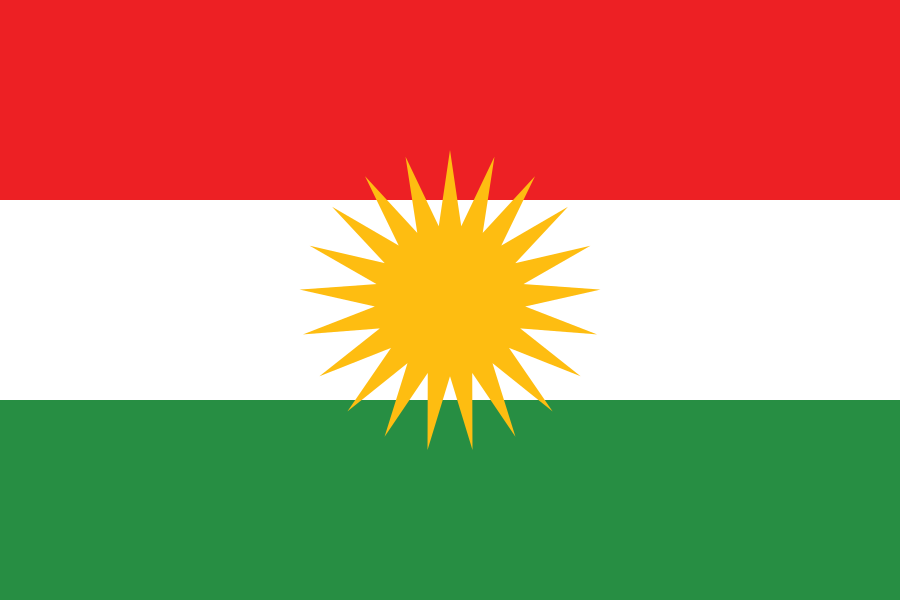
The modern framework for Iraqi Kurdish governance coalesced in the aftermath of the 1991 Gulf War. Following the Iraqi army's withdrawal from northern Iraq, Kurdish factions established the Kurdistan Regional Government (KRG), creating a de facto autonomous zone. This self-rule was later enshrined in the Iraqi Constitution, which formally recognized the KRG as a federal region within Iraq. The KRG operates with its own parliament, president, and cabinet, overseeing areas like education, healthcare, and security within its designated territories. However, the precise delineation of powers and resource sharing, particularly concerning oil revenues, remains a persistent point of contention with the central government in Baghdad.
📊 Key Facts & Demographics
Iraqi Kurds are a significant minority in Kirkuk and Nineveh. A significant portion of the population is under the age of 25. The KRG's economy, while heavily reliant on oil exports and federal transfers, is also diversifying, with growing sectors in agriculture, tourism, and services. The literacy rate in the KRG is estimated to be over 80%, reflecting a strong emphasis on education.
👥 Key Figures & Organizations
Several key figures and organizations have shaped the trajectory of Iraqi Kurds. The Patriotic Union of Kurdistan (PUK) and the Kurdistan Democratic Party (KDP) have historically been the dominant political forces, often vying for influence but also cooperating to maintain regional autonomy. Leaders like Jalal Talabani, a co-founder of the PUK and former President of Iraq, and Massoud Barzani, former President of the KRG, have played pivotal roles. The Peshmerga forces, the armed military of the KRG, are crucial for regional security, having played a significant role in combating ISIS alongside international coalitions. Numerous cultural and academic institutions, such as the University of Sulaymaniyah, are vital for preserving and promoting Kurdish heritage.
🌍 Cultural Identity & Language
The linguistic and cultural landscape of Iraqi Kurds is rich and diverse. While Sorani is the most widely spoken dialect in the KRG's administrative capital of Erbil, Kurmanji is prevalent in Dohuk. Other dialects like Feyli and Gorani also have significant speaker populations. Kurdish culture is expressed through vibrant music, traditional dance forms like Gavan, intricate handicrafts, and a strong oral tradition of storytelling and poetry. The Nowruz festival, marking the Persian New Year and the arrival of spring, is a particularly important cultural celebration, often accompanied by large public gatherings and symbolic bonfires. Despite historical attempts at Arabization, Kurdish identity remains a powerful unifying force.
⚡ Contemporary Challenges & Resilience
Iraqi Kurds continue to navigate a complex geopolitical environment marked by internal political dynamics and external pressures. The fight against ISIS saw the Peshmerga forces play a critical frontline role, earning international respect and support, though this also led to significant economic strain and displacement. The KRG faces ongoing economic challenges, including fluctuating oil prices and disputes over budget allocations from Baghdad. Internally, political rivalries between the PUK and KDP can sometimes lead to instability, though they often unite on broader issues of autonomy. The presence of a significant Kurdish population in neighboring countries like Iran, Syria, and Turkey also influences regional dynamics and Baghdad's foreign policy considerations.
🤔 Historical Grievances & Debates
The legacy of historical grievances, particularly the Anfal genocide, continues to shape the identity and political aspirations of Iraqi Kurds. Debates persist regarding the full recognition and compensation for these atrocities, as well as the status of disputed territories like Kirkuk, which has a mixed population and significant oil reserves, and has been a flashpoint for conflict between Kurdish forces and the Iraqi federal government. The question of Kurdish independence, while less prominent since the establishment of the KRG, remains a latent aspiration for some, periodically resurfacing during periods of heightened tension with Baghdad or in response to perceived threats to Kurdish autonomy. The role of the KRG in managing its own resources, particularly oil, is another area of ongoing debate and negotiation.
🔮 Future Outlook
The future for Iraqi Kurds hinges on several critical factors. The continued stability and economic viability of the KRG will be paramount, requiring a sustainable resolution to budget disputes with Baghdad and diversification of its economy beyond oil. The KRG's relationship with Baghdad will likely remain a delicate balancing act, with potential for both increased cooperation and renewed friction. The broader regional context, including the political situations in Iran, Syria, and Turkey, will continue to influence Kurdish aspirations and security. Furthermore, the KRG's ability to foster political unity among its own factions and address internal challenges will be crucial for its long-term success and the preservation of its hard-won autonomy within the Iraqi federal structure. The potential for renewed conflict over disputed territories like Kirkuk also remains a significant concern.
💡 Role in Regional Politics
Iraqi Kurds play a significant role in regional and international politics, primarily through the KRG. The KRG has established diplomatic missions in numerous countries and hosts foreign consulates, fostering economic and political ties. Their military, the Peshmerga, gained international recognition for their crucial role in the fight against ISIS, leading to increased military cooperation and training from Western nations, including the United States and European Union member states. The KRG's strategic location and its own resource wealth make it an important player in Middle Eastern geopolitics, influencing relations between Iraq and its neighbors, as well as broader energy market dynamics. Their experience with federalism also serves as a case study for other regions seeking to manage ethnic diversity within state structures.
Key Facts
- Category
- culture
- Type
- topic