
Contents
- 💡 What is LAMP Stack? A Practical Overview
- ⚙️ The Core Components: A Deep Dive
- 🚀 Who is LAMP Stack For?
- 📈 Historical Context & Evolution
- ⚖️ LAMP vs. Alternatives: Making the Choice
- 💰 Pricing & Cost Considerations
- ⭐ Community & Support
- 🛠️ Getting Started with LAMP Stack
- Frequently Asked Questions
- Related Topics
Overview
The LAMP stack—Linux, Apache, MySQL, and PHP (or Python/Perl)—is a foundational, open-source web development framework that has powered a significant portion of the internet for decades. Think of it as the robust, reliable engine under the hood of countless websites and web applications, from dynamic blogs to complex e-commerce platforms. Its enduring popularity stems from its flexibility, cost-effectiveness, and the vast ecosystem of tools and developers it supports. Understanding LAMP is crucial for anyone looking to build or manage web infrastructure, offering a stable and well-trodden path in the often-turbulent world of web technologies.
⚙️ The Core Components: A Deep Dive
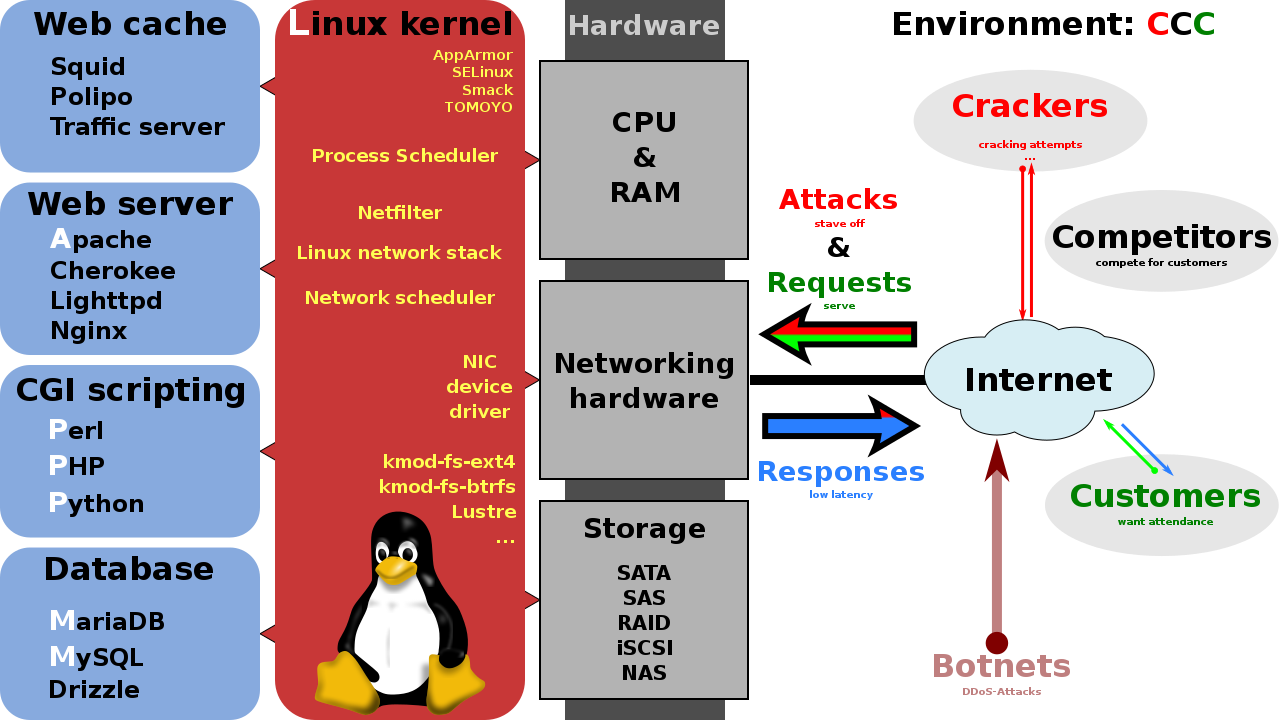
At its heart, LAMP is a modular system, allowing for component-level understanding and customization. Linux serves as the operating system, providing a stable and secure foundation. The Apache HTTP Server acts as the web server, handling requests from clients and delivering content. MySQL (or its forks like MariaDB) is the relational database management system, storing and organizing all your application's data. Finally, PHP, Python, or Perl are the scripting languages that process data, interact with the database, and generate dynamic content for users. Each piece plays a distinct, yet interconnected, role in bringing a web application to life.
🚀 Who is LAMP Stack For?
LAMP stack is an ideal choice for a wide range of users, from individual developers and small startups to large enterprises. It's particularly well-suited for projects requiring a robust, scalable, and cost-effective solution for dynamic websites and web applications. If you're building a content management system like WordPress, a forum, an e-commerce site, or a custom web application, LAMP provides a proven and reliable environment. Its open-source nature also makes it attractive for those looking to avoid vendor lock-in and maintain full control over their technology stack.
📈 Historical Context & Evolution
The origins of the LAMP stack can be traced back to the late 1990s, a period of explosive growth for the World Wide Web. The combination of Linux, Apache, MySQL, and PHP (initially Personal Home Page Tools) emerged organically as developers sought powerful, free, and open-source alternatives to proprietary solutions. This early adoption and continuous development by a global community have cemented its status as a cornerstone of web infrastructure, evolving alongside internet technologies while retaining its core principles of modularity and accessibility. The stack's adaptability is a testament to its design, allowing it to integrate with newer technologies as the web landscape shifts.
⚖️ LAMP vs. Alternatives: Making the Choice
When considering a web development stack, LAMP is often compared to alternatives like the MEAN stack (MongoDB, Express.js, Angular, Node.js) or the MERN stack (MongoDB, Express.js, React, Node.js). While LAMP leverages traditional relational databases and server-side scripting, MEAN/MERN stacks often favor NoSQL databases and JavaScript across the full stack. The choice between them hinges on project requirements, team expertise, and performance needs. LAMP's maturity means extensive documentation and a vast developer pool, whereas newer stacks might offer more modern paradigms or specific performance advantages for certain applications.
💰 Pricing & Cost Considerations
One of the most compelling aspects of the LAMP stack is its cost-effectiveness. As an open-source solution, the core components—Linux, Apache, MySQL, and PHP/Python/Perl—are free to use, distribute, and modify. This significantly reduces initial software licensing costs, making it an attractive option for budget-conscious projects. While the software itself is free, costs will typically arise from web hosting services, domain registration, and potentially specialized support or development expertise. However, compared to proprietary software suites, the total cost of ownership for a LAMP-based solution is often considerably lower.
⭐ Community & Support
The strength of the LAMP stack lies not just in its technology but in its vibrant and extensive community. With decades of development and widespread adoption, there's an enormous wealth of resources available, from official documentation and tutorials to community forums and Stack Overflow threads. This means that encountering a problem rarely leaves you without a solution. Developers familiar with any of the LAMP components can readily find support, share knowledge, and contribute to the ongoing evolution of the stack. This collective intelligence is a significant advantage for any project relying on LAMP.
🛠️ Getting Started with LAMP Stack
Getting started with the LAMP stack is more accessible than ever, thanks to numerous hosting providers that offer one-click installations or pre-configured LAMP environments. For those who prefer a hands-on approach, setting up a local development environment on your own machine is straightforward. Many Linux distributions come with Apache and MySQL readily available, and installing PHP is typically a simple package manager command. Numerous online tutorials and guides walk you through each step, from installing the OS to configuring the web server and database. You can also explore managed cloud hosting platforms that simplify deployment and scaling.
Key Facts
- Year
- 1998
- Origin
- The term LAMP was coined by Tim O'Reilly in 1998, though the components had been in use individually and in various combinations for years prior. Its widespread adoption is often attributed to its early availability and the growing demand for dynamic web content.
- Category
- Technology
- Type
- Software Stack
Frequently Asked Questions
Is LAMP stack still relevant in 2024?
Absolutely. While newer stacks have emerged, LAMP remains incredibly relevant, powering a vast percentage of the web, including major platforms like WordPress. Its stability, cost-effectiveness, and massive community support ensure its continued use for many types of web applications. It's a proven workhorse that continues to be a reliable choice for many developers and businesses.
What are the main advantages of using LAMP?
The primary advantages include its open-source nature, meaning no licensing fees for the core components, leading to significant cost savings. It's highly flexible, scalable, and benefits from a massive, supportive community providing extensive documentation and troubleshooting resources. Its maturity also means a vast pool of experienced developers is available.
What are the disadvantages of LAMP?
One potential disadvantage is that it can be perceived as less modern compared to JavaScript-centric stacks, which might be preferred for certain real-time applications. Configuration and maintenance can sometimes require more server administration knowledge. Performance, while generally good, might require careful tuning for extremely high-traffic sites compared to some highly optimized, specialized stacks.
Can I swap out components in the LAMP stack?
Yes, the 'L' in LAMP is often considered interchangeable. While Linux is standard, you can run Apache, MySQL, and PHP on other operating systems like Windows Server or macOS. Similarly, while PHP is common, Python or Perl are often used as the scripting language. This modularity is a key strength.
What kind of websites are best suited for LAMP?
LAMP is excellent for dynamic websites, content management systems (like WordPress, Drupal, Joomla), e-commerce platforms, forums, and custom web applications that require robust database interaction. Its reliability makes it suitable for almost any project that doesn't specifically demand the unique benefits of a NoSQL or full-JavaScript stack.
How does LAMP compare to LEMP?
LEMP is a variation where 'E' stands for Nginx (pronounced 'Engine-X') instead of Apache. Nginx is known for its high performance and efficiency, especially in serving static content and handling concurrent connections. While Apache is a more traditional, feature-rich web server, Nginx often excels in speed and resource utilization, making LEMP a popular choice for high-traffic sites.