
Contents
Overview
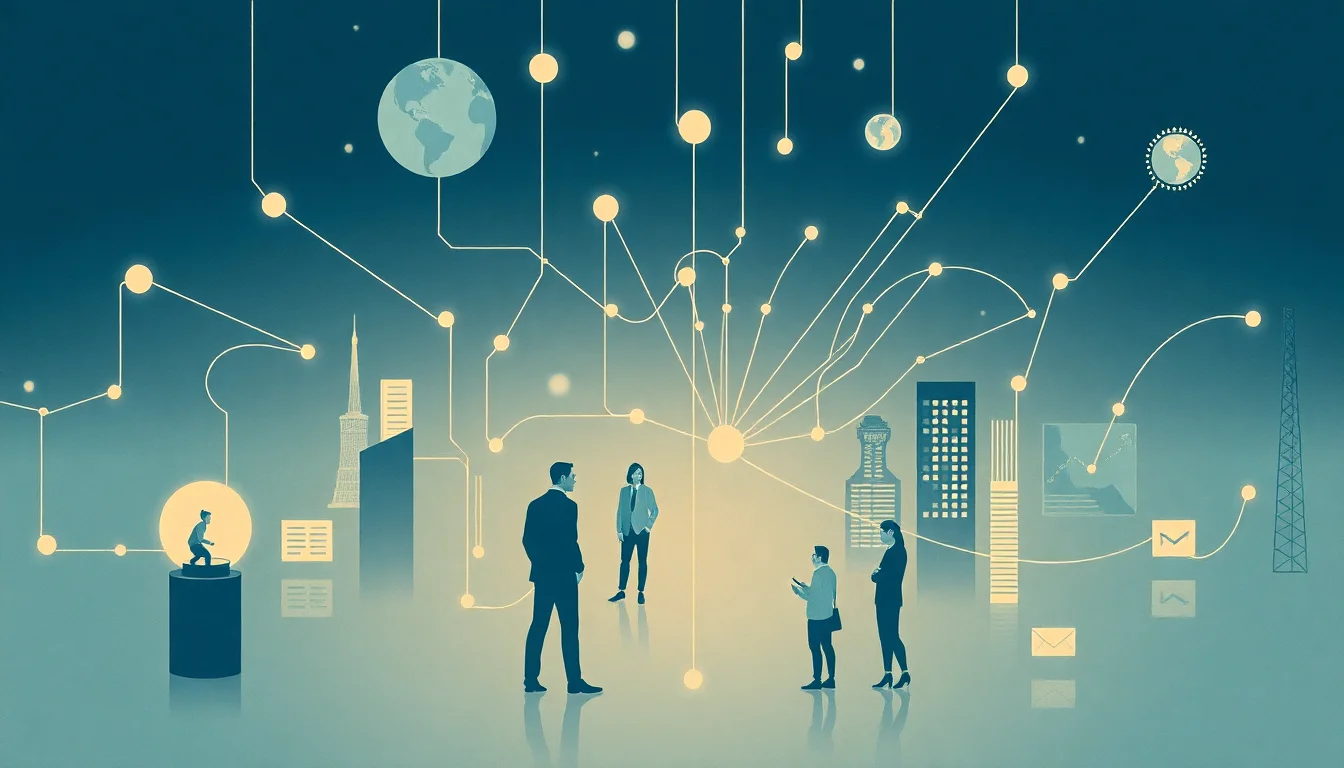
Modern society, broadly encompassing the period from the late 19th century to the present, is characterized by rapid technological advancement, globalization, urbanization, and profound shifts in social structures and individual identities. It's a dynamic epoch defined by the interplay of mass media, digital communication, and evolving political and economic systems. With a global population exceeding 8 billion, its complexities are amplified by unprecedented connectivity, leading to both immense opportunities for collaboration and significant challenges like information overload, social fragmentation, and environmental concerns. The very definition of 'modern' is in constant flux, with debates around whether we've entered a 'postmodern' or even 'post-postmodern' era, yet the core tenets of rapid change, interconnectedness, and the pursuit of progress remain defining features. Understanding modern society requires navigating its intricate web of cultural norms, technological dependencies, and the persistent human drive for meaning and belonging.
🎵 Origins & History
The genesis of modern society can be traced back to the seismic shifts of the Industrial Revolution (c. 1760-1840), which fundamentally altered production, labor, and settlement patterns, leading to mass urbanization. This was further propelled by intellectual currents like the Enlightenment (c. 1685-1815), which championed reason, individualism, and scientific inquiry, challenging traditional hierarchies and ushering in new political philosophies. The late 19th and early 20th centuries witnessed the rise of mass media, the automobile, and early forms of digital technology, accelerating the pace of change and global interconnectedness. Key thinkers like Émile Durkheim analyzed its emergent properties, while Max Weber explored the concept of rationalization as a driving force. The aftermath of World War II (1939-1945) solidified many of its defining characteristics, including the rise of superpowers and the beginnings of widespread consumerism.
⚙️ How It Works
Modern society operates on a complex infrastructure of interconnected systems. Economically, it's largely driven by globalized capitalism, characterized by intricate supply chains, financial markets, and multinational corporations like Nestlé and Amazon-com. Socially, it's structured by diverse institutions—governments, educational systems (from Harvard University to local primary schools), healthcare networks, and religious organizations—all navigating evolving norms and demographics. Technologically, it relies on a vast digital nervous system, including the Internet and mobile devices, facilitating instantaneous communication and information dissemination. The flow of information, capital, and culture across borders is a defining mechanism, mediated by platforms such as Google and Meta.
📊 Key Facts & Numbers
The sheer scale of modern society is staggering. Over 8.1 billion people inhabit the planet as of 2024, with more than 56% living in urban areas. The global economy is valued at over $100 trillion USD annually. The Internet connects an estimated 5.35 billion users worldwide, with daily data generation reaching an estimated 328 million terabytes. By 2023, smartphone penetration exceeded 6.9 billion devices. The average life expectancy globally has risen to approximately 73.4 years (2023 data from the World Health Organization). Despite progress, approximately 700 million people still live in extreme poverty, earning less than $2.15 a day.
👥 Key People & Organizations
Key figures who have shaped our understanding and experience of modern society are numerous. Marshall McLuhan, a media theorist, famously coined "the global village" to describe the impact of electronic media. Manuel Castells, a sociologist, extensively documented the network society and the information age. Organizations like the United Nations attempt to govern global interactions, while tech giants such as Apple and Microsoft are instrumental in shaping our technological landscape. Think tanks like the Brookings Institution and Chatham House analyze its political and economic trends. The World Economic Forum convenes global leaders to discuss its challenges.
🌍 Cultural Impact & Influence
Modern society's cultural footprint is pervasive and transformative. The rise of mass media—television, film, and music—has created shared cultural experiences on an unprecedented scale, influencing everything from fashion trends to political discourse. The digital age has further democratized content creation and consumption, giving rise to phenomena like online influencers and the rapid spread of internet memes. Globalization has led to a complex exchange of cultural practices, resulting in both the homogenization of certain aspects of culture and the vibrant fusion of traditions. The concept of identity has become increasingly central, with individuals and groups asserting their unique characteristics in public life, impacting everything from consumer choices to political movements.
⚡ Current State & Latest Developments
As of 2024, modern society is grappling with several critical developments. The rapid acceleration of AI development, exemplified by models like OpenAI's GPT-4, is poised to reshape industries and labor markets. Geopolitical tensions, particularly between major powers like the United States and China, are influencing global trade and alliances. The ongoing climate crisis is driving significant policy shifts and public awareness campaigns, with events like the 2023 UN Climate Change Conference highlighting the urgency. Furthermore, the increasing prevalence of misinformation on social media platforms like X (formerly Twitter) poses a significant challenge to democratic processes and public trust.
🤔 Controversies & Debates
Modern society is rife with controversy. The debate over economic inequality persists, with critics arguing that current capitalist structures benefit a select few at the expense of the many, citing data on wealth concentration by figures like Bernard Arnault. The ethical implications of AI—job displacement, bias in algorithms, and autonomous weapons—are fiercely debated. Privacy concerns are paramount in an era of ubiquitous surveillance and data collection by corporations and governments. The role and impact of social media platforms on mental health, political polarization, and the spread of extremism remain contentious issues, with ongoing scrutiny of companies like Meta.
🔮 Future Outlook & Predictions
The future of modern society is a subject of intense speculation. Some futurists, like Ray Kurzweil, predict a technological singularity where AI surpasses human intelligence, leading to unprecedented societal transformation. Others foresee a more gradual evolution, focusing on sustainable development, circular economies, and the potential for greater global cooperation to address challenges like climate change and pandemics. The increasing integration of virtual and augmented reality technologies may fundamentally alter human interaction and experience. The potential for further geopolitical fragmentation or, conversely, a strengthening of international governance structures, remains a critical unknown.
💡 Practical Applications
Modern society's principles and technologies are applied across virtually every domain. Urban planning utilizes data analytics and smart city technologies to manage infrastructure and services for millions. Biotechnology and pharmaceutical companies like Pfizer leverage advanced research to develop new treatments and vaccines. Fintech companies are revolutionizing banking and investment through digital platforms. EdTech solutions are transforming learning delivery, offering online courses from institutions like Coursera and personalized learning experiences. The principles of project management and agile methodologies are employed by organizations worldwide to navigate complex endeavors.
Key Facts
- Category
- culture
- Type
- topic