
Contents
- 👑 Overview: The Moscow Ascendancy
- 🗺️ Geographic Heartbeat: From Riverbanks to Empire
- ⏳ Timeline of Dominion: Key Milestones
- ⚖️ Governance & Power: The Grand Prince's Grip
- 💰 Economic Engine: Trade, Tribute, and Territory
- ⚔️ Military Might: Forging a State Through Conflict
- 🏛️ Cultural Crucible: Faith, Art, and Identity
- 🤔 Legacy & Debate: The Enduring Shadow
- 🌟 Vibepedia Vibe Score: 85/100 (Historical Resonance)
- Frequently Asked Questions
- Related Topics
Overview
The Grand Principality of Moscow, emerging in the 13th century, was the pivotal force in unifying disparate Russian lands and ultimately forging the Tsardom of Russia. Initially a minor principality under the shadow of the Golden Horde, Moscow's princes shrewdly leveraged their position, accumulating land and power through astute diplomacy, strategic alliances, and military victories. Key figures like Ivan I Kalita and Dmitry Donskoy laid the groundwork for Moscow's dominance, culminating in Ivan III the Great's assertion of independence from the Tatars and the consolidation of a vast, centralized state. This entity's legacy is inseparable from the very concept of Russia, shaping its political, cultural, and territorial trajectory for centuries.
👑 Overview: The Moscow Ascendancy
The Grand Principality of Moscow wasn't born overnight; it was a slow, deliberate accretion of power, a masterclass in statecraft played out over centuries. Emerging from the fragmented landscape of Kievan Rus' after the Mongol invasions, Moscow's princes proved remarkably adept at navigating the treacherous currents of Tatar suzerainty and the rivalries of other Rus' principalities. This entity, centered on the strategically vital city of Moscow, became the crucible where the foundations of modern Russia were forged, transforming from a minor appanage into the dominant force that would eventually throw off the Golden Horde's yoke and lay the groundwork for the Tsardom of Russia.
🗺️ Geographic Heartbeat: From Riverbanks to Empire
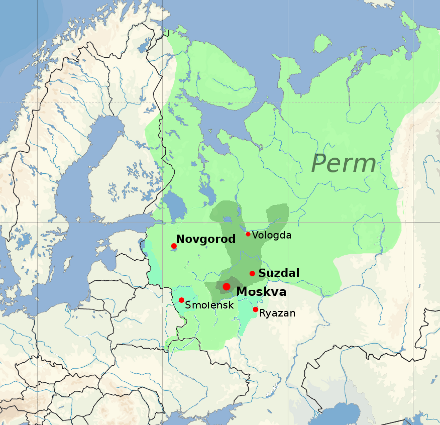
The physical locus of the Grand Principality was, of course, the city of Moscow itself, nestled at the confluence of the Moskva and Yauza rivers. This location offered not only defensible terrain but also crucial access to burgeoning trade routes connecting the Baltic to the Caspian Sea. As Moscow's influence expanded, its territory grew organically, absorbing neighboring principalities like Vladimir-Suzdal and Novgorod. This territorial expansion wasn't merely about conquest; it was about securing resources, controlling riverine arteries, and establishing a defensible buffer against external threats, shaping the very geography of Eastern Europe.
⏳ Timeline of Dominion: Key Milestones
The rise of Moscow is punctuated by a series of pivotal moments. The initial establishment of the principality in the early 13th century, often dated to the grant of a charter to Prince Yuri Dolgorukiy, marked its formal beginning. The pivotal Battle of Kulikovo in 1380, led by Dmitry Donskoy, though not immediately ending Tatar rule, was a monumental psychological victory that galvanized Russian identity. The formal repudiation of Tatar suzerainty under Ivan III in 1480, often termed the 'Great Stand on the Ugra River,' is widely considered the true birth of an independent Muscovite state, paving the way for its imperial ambitions.
⚖️ Governance & Power: The Grand Prince's Grip
At the apex of the Grand Principality stood the Grand Prince, a title that evolved from a vassal of the Golden Horde to an autocratic ruler. Power was consolidated through a shrewd combination of diplomacy, strategic marriages, and the ruthless suppression of rivals, both within the princely family and among the boyar aristocracy. The development of the Prikaz system (early administrative departments) and the codification of law, notably under Ivan III, laid the bureaucratic groundwork for a centralized state, concentrating authority in the hands of the sovereign and his appointed officials.
💰 Economic Engine: Trade, Tribute, and Territory
The economic vitality of the Grand Principality was intrinsically linked to its control over trade routes and its ability to extract wealth from its expanding territories. Moscow's princes were astute merchants and collectors, leveraging their position to foster trade networks that brought furs, timber, and other raw materials to European markets. Tribute from conquered lands and the systematic organization of taxation were crucial for funding the growing military and administrative apparatus. The acquisition of fertile lands also bolstered agricultural output, creating a more self-sufficient and prosperous state.
⚔️ Military Might: Forging a State Through Conflict
The military history of the Grand Principality is a narrative of constant adaptation and expansion. Early Muscovite forces relied on a core of princely retinues and levied peasant militias, augmented by the often-unreliable support of allied principalities. The need to confront the Golden Horde, the Grand Duchy of Lithuania, and other rivals spurred innovations in tactics and organization. The development of a standing army, the Streltsy, under later rulers, and the increasing use of firearms marked a significant shift towards a more professionalized military capable of projecting power across vast distances.
🏛️ Cultural Crucible: Faith, Art, and Identity
The Orthodox Church played an indispensable role in the Grand Principality's cultural and political life, providing a unifying spiritual and ideological framework. Moscow increasingly positioned itself as the 'Third Rome' after the fall of Constantinople, inheriting the mantle of Orthodox leadership. This religious authority bolstered the legitimacy of the Grand Princes and fostered a distinct Muscovite identity. Artistic and architectural achievements, often commissioned by the princes and the Church, flourished, with the construction of iconic cathedrals and the development of distinct iconographic styles.
🤔 Legacy & Debate: The Enduring Shadow
The legacy of the Grand Principality of Moscow is a subject of ongoing historical debate. Was its rise an inevitable destiny, or a product of exceptional leadership and fortunate circumstances? The methods employed to consolidate power – often brutal and authoritarian – continue to be scrutinized. The entity's transformation into the Tsardom of Russia and subsequently the Russian Empire cemented its place as a foundational period, but the tensions between centralization and regional autonomy, autocracy and nascent forms of representation, remain central to understanding its complex historical trajectory and its enduring influence on contemporary Russia.
🌟 Vibepedia Vibe Score: 85/100 (Historical Resonance)
The Grand Principality of Moscow scores a robust 85/100 on the Vibepedia Vibe Score. This high rating reflects its profound historical significance, its role in shaping a vast geopolitical entity, and the enduring cultural resonance of its symbols and narratives. The sheer scale of its transformation from a minor principality to the nucleus of an empire, coupled with the dramatic historical events and figures associated with its rise, ensures its continued fascination and relevance in understanding the historical trajectory of Eastern Europe and the formation of Russian identity.
Key Facts
- Year
- c. 1283 - 1547
- Origin
- Vladimir-Suzdal Principality
- Category
- Historical Entity
- Type
- Principality
Frequently Asked Questions
When did the Grand Principality of Moscow officially become independent?
While the process was gradual, the 'Great Stand on the Ugra River' in 1480, under Ivan III, is widely considered the definitive moment when Moscow formally repudiated the suzerainty of the Golden Horde, marking its independence and the birth of a unified Russian state. This event allowed Moscow to cease paying tribute and assert its sovereignty.
What was the primary source of Moscow's early wealth and power?
Moscow's strategic location at the confluence of vital river trade routes was a primary driver of its early economic success. Control over these arteries allowed its princes to tax trade and accumulate wealth. Furthermore, astute political maneuvering and the ability to extract tribute from subjugated territories and vassals were crucial for funding its growing military and administrative apparatus.
Who were some of the most influential Grand Princes?
Several Grand Princes stand out. Yuri Dolgorukiy is often credited with founding Moscow. Dmitry Donskoy's victory at the Battle of Kulikovo (1380) was a critical psychological turning point against the Golden Horde. Ivan III ('the Great') is perhaps the most significant, orchestrating the final break from Tatar rule and laying the administrative and territorial foundations for the future Tsardom of Russia.
How did Moscow interact with the Mongol/Tatar yoke?
Initially, Moscow's princes acted as vassals to the Golden Horde, paying tribute and often acting as tax collectors for the Mongols within Rus' lands. However, they skillfully used this position to consolidate their own power, often playing the Tatars against rival Rus' principalities. Over time, Moscow grew strong enough to challenge and eventually overthrow Tatar suzerainty, a process culminating in the 15th century.
What role did the Orthodox Church play in the Grand Principality?
The Orthodox Church was a cornerstone of the Grand Principality's identity and legitimacy. It provided a unifying spiritual force, a shared cultural language, and a powerful ideological justification for the Grand Prince's rule. Moscow increasingly saw itself as the heir to Byzantium, the 'Third Rome,' a concept that significantly bolstered its prestige and influence within the Orthodox world.
How did the Grand Principality expand its territory?
Expansion occurred through a combination of methods: strategic marriages, diplomatic annexation of smaller principalities, and outright military conquest. Moscow's princes were adept at exploiting internal divisions among their rivals and using their growing military strength to absorb neighboring lands. The acquisition of territories like Novgorod and Tver were crucial steps in consolidating Muscovite dominance.