
Contents
Overview
The Nuclear Security Summit (NSS) was a series of international summits convened to address the critical issue of nuclear terrorism. Initiated in 2010 by U.S. President Barack Obama, the summits brought together leaders from over 50 nations and international organizations to enhance global cooperation in securing radioactive materials. The primary objective was to prevent non-state actors, particularly terrorist groups, from acquiring or developing nuclear weapons or radiological dispersal devices. These high-stakes meetings focused on concrete actions, including strengthening national security measures, improving international protocols for material transport, and fostering intelligence sharing. While the summits spurred significant commitments and tangible progress in material control, their long-term impact and the ongoing challenge of nuclear proliferation remain subjects of intense debate.
🎵 Origins & History
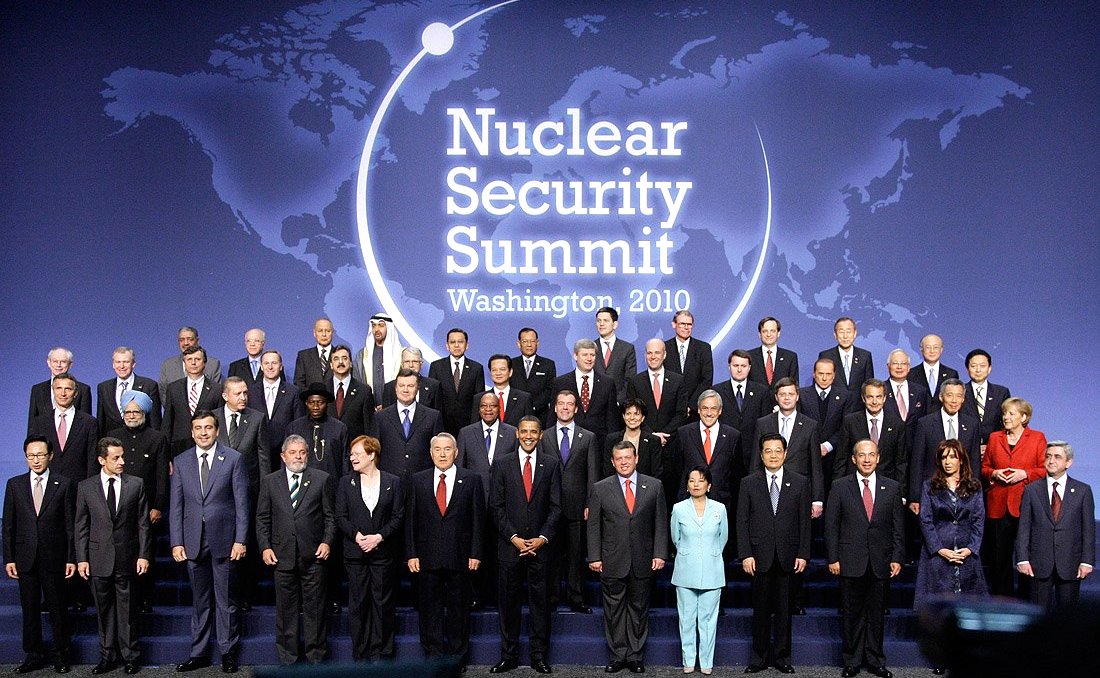
The genesis of the Nuclear Security Summit can be traced to growing international anxieties following the 9/11 attacks. U.S. President Barack Obama, in his 2009 Prague speech, articulated a vision for a world free of nuclear weapons and highlighted the immediate threat posed by unsecured fissile materials. This led to the convening of the inaugural Nuclear Security Summit in Washington, D.C., on April 12-13, 2010. This landmark event, attended by leaders from 47 nations and four international organizations, marked a significant shift towards a focused, action-oriented approach to nuclear security, distinct from broader arms control discussions. Subsequent summits were held in Seoul (2012), The Hague (2014), and Washington, D.C. (2016), each building upon the commitments made in the previous meetings.
⚙️ How It Works
The Nuclear Security Summit operated as a high-level diplomatic forum where participating states committed to specific actions and policy changes regarding nuclear material security. Unlike traditional arms control treaties, the NSS focused on practical measures to prevent theft or diversion of weapons-grade plutonium and highly enriched uranium, as well as the security of radioactive sources used in medicine and industry. Discussions centered on national implementation plans, peer reviews, and the sharing of best practices for physical protection, personnel reliability, and accounting for nuclear materials. The summits aimed to build political will and foster a global norm against the illicit trafficking of such dangerous substances. Key outcomes often included joint statements, bilateral agreements, and voluntary national pledges to enhance security protocols.
📊 Key Facts & Numbers
The 2010 Nuclear Security Summit in Washington, D.C., involved leaders from 47 nations and 5 international organizations, representing over 90% of the world's nuclear materials. By the 2016 summit, the number of participating countries had grown to 52. Over the course of the summit series, participating nations made over 260 specific, actionable commitments to improve nuclear security. These commitments translated into an estimated $20 billion in new national investments in nuclear security measures. Furthermore, the summits facilitated the removal or disposition of over 3.8 metric tons of vulnerable nuclear materials, enough for potentially hundreds of nuclear weapons. The NSS framework led to the establishment of numerous regional training centers dedicated to nuclear security.
👥 Key People & Organizations
The driving force behind the Nuclear Security Summit was U.S. President Barack Obama, who initiated the series in 2010. His administration played a pivotal role in setting the agenda and galvanizing international participation. Other key figures included South Korean President Lee Myung-bak, who hosted the 2012 summit, and Dutch Prime Minister Mark Rutte, host of the 2014 summit. International Atomic Energy Agency (IAEA) Director General Yukiya Amano was a crucial partner, providing technical expertise and support. The United Nations and Interpol also played significant roles in facilitating discussions and coordinating efforts. National leaders from major nuclear powers like Vladimir Putin of Russia and Xi Jinping of China were essential for the summit's global reach.
🌍 Cultural Impact & Influence
The Nuclear Security Summit series significantly elevated the profile of nuclear security as a global priority, moving it from a niche technical issue to a prominent topic on the international political agenda. It fostered a unique diplomatic environment where leaders directly engaged with the technicalities of safeguarding nuclear materials, leading to a shared understanding of the risks and responsibilities. The summits also spurred a wave of national policy reviews and legislative changes related to nuclear security in many participating countries. While not a treaty-making body, the NSS created a powerful peer-pressure mechanism that encouraged tangible improvements in material security worldwide, influencing public perception and media coverage of nuclear threats.
⚡ Current State & Latest Developments
Following the final summit in Washington, D.C., in 2016, the dedicated NSS process concluded, having achieved many of its initial goals. However, the threat of nuclear terrorism persists, and the need for sustained international cooperation remains. Efforts are now underway to institutionalize the progress made during the NSS within existing international frameworks, such as the IAEA and the UN Security Council. The NPT review process and regional security dialogues continue to address nuclear security challenges. Discussions are ongoing regarding the potential for future, less frequent, high-level summits or ministerial meetings to maintain political momentum and address emerging threats.
🤔 Controversies & Debates
A central controversy surrounding the Nuclear Security Summits is their effectiveness in permanently eliminating the threat of nuclear terrorism. Critics argue that while the summits generated significant political attention and voluntary commitments, they did not create legally binding obligations, leaving enforcement largely to national discretion. The exclusion of certain states with significant nuclear programs, such as Israel, from full participation also drew criticism. Furthermore, questions persist about the long-term sustainability of the security measures implemented, especially in regions with ongoing political instability or limited resources. The sheer volume of nuclear material globally means that even a small amount diverted could have catastrophic consequences, a risk that summits alone cannot fully mitigate.
🔮 Future Outlook & Predictions
The future of nuclear security cooperation will likely involve a transition from the dedicated NSS format to more integrated approaches within established international organizations. The IAEA is poised to play an even more central role in setting standards, conducting reviews, and providing technical assistance. There is also a growing recognition of the need to address the security of emerging nuclear technologies and materials, such as those used in advanced reactors or medical applications. Future efforts may focus on enhancing the security of cyber infrastructure related to nuclear facilities and strengthening international legal frameworks to prosecute nuclear smuggling. The possibility of ad-hoc high-level meetings, perhaps convened by the UN Secretary-General, to address specific crises or emerging threats cannot be ruled out.
💡 Practical Applications
The practical applications of the Nuclear Security Summit's outcomes are evident in enhanced physical security measures at nuclear facilities worldwide. This includes improved surveillance systems, reinforced containment structures, and stricter access controls to prevent unauthorized entry and theft of fissile materials. The summits also spurred advancements in the tracking and accounting of nuclear materials, employing sophisticated inventory management systems and international verification protocols. Furthermore, the NSS framework facilitated the secure transport and removal of vulnerable nuclear stockpiles, such as highly enriched uranium, from numerous countries, thereby reducing the global inventory of materials that could be targeted by terrorists. The establishment of regional centers for nuclear security training also provides ongoing practical expertise.
Key Facts
- Category
- events
- Type
- topic