
Contents
Overview
Samsung QLED refers to a line of high-end televisions manufactured by Samsung Electronics that utilize quantum dot (QD) technology to enhance color reproduction and brightness. Introduced in 2017, QLED TVs are fundamentally liquid-crystal display (LCD) panels, but they incorporate a layer of quantum dots – semiconductor nanocrystals that emit specific colors when excited by light. This allows them to achieve wider color gamuts and higher peak brightness compared to traditional LED-backlit LCDs. While Samsung has heavily marketed QLED as a distinct premium category, it remains a form of LCD technology, distinct from OLED or the emerging MicroLED displays. The technology has seen continuous iteration, with Samsung introducing advancements like Neo QLED featuring Mini-LED backlighting for improved contrast and black levels, positioning QLED as a persistent contender in the premium television market.
🎵 Origins & History
Samsung's QLED journey began with the launch of its QLED TV lineup, a strategic move to differentiate its premium LCD offerings from competitors and the burgeoning OLED market. The underlying quantum dot technology had been in development for years, with research tracing back to the early 1980s. Scientists like Alexei Ekimov and Louis Brus at Bell Labs were awarded the Nobel Prize in Chemistry in 2023 for their discovery. Samsung's innovation lay in integrating photo-emissive quantum dots into the backlight layer of an LCD panel, creating a more vibrant and efficient color spectrum than traditional LED backlights. This marked a significant departure from their previous SUHD TV branding, signaling a new era of display technology focused on color purity and brightness.
⚙️ How It Works
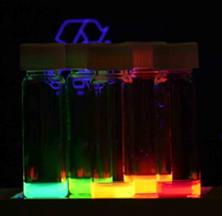
At its core, a Samsung QLED TV is an LCD television. The 'Q' in QLED signifies the inclusion of a quantum dot film layer, typically placed between the LED backlight and the LCD panel. When the blue LED backlight shines through this film, the quantum dots absorb some of the blue light and re-emit it as highly pure red and green light. This precisely tuned red, green, and blue light then passes through the LCD's color filter and liquid crystal layer to form the image. Unlike OLED displays where each pixel emits its own light, QLEDs rely on a backlight, which is why Samsung has increasingly integrated Mini-LED technology in its higher-end Neo QLED models to achieve better local dimming and contrast ratios.
📊 Key Facts & Numbers
Samsung shipped an estimated 9.4 million QLED TVs globally in 2023, representing a significant portion of the premium TV market. The company aims to maintain its position as the world's top TV seller for the 18th consecutive year in 2024. QLED TVs typically boast peak brightness levels exceeding 1000 nits, with some flagship models reaching up to 4000 nits, far surpassing the capabilities of many standard LED TVs. Color volume on QLED displays can reach up to 100% of the DCI-P3 color space, and newer models are pushing towards the Rec. 2020 standard, offering a wider palette of visible colors. The price range for Samsung QLED TVs can span from approximately $600 for entry-level models to over $5,000 for top-tier 8K variants.
👥 Key People & Organizations
The QLED technology is intrinsically linked to Samsung Electronics, the South Korean conglomerate that spearheaded its commercialization. Key figures within Samsung's display division, such as Han Jong-hee, Vice Chairman and CEO of Samsung Electronics DX Division, have been instrumental in driving the QLED strategy. Beyond Samsung, companies like TCL also produce QLED TVs, often licensing the technology or developing their own variations. Nanoco Technologies and Nichia Corporation are notable suppliers of quantum dot materials used in various QLED displays, highlighting a complex supply chain involving multiple players in the display industry.
🌍 Cultural Impact & Influence
Samsung QLED has significantly influenced the consumer perception of premium television technology, establishing 'QLED' as a household term synonymous with high-quality picture. It has driven a competitive response from other manufacturers, pushing the entire industry towards brighter displays and wider color gamuts. The marketing push by Samsung has also arguably created a perception among some consumers that QLED is a fundamentally new display technology, distinct from LCD, which has been a point of contention. This has led to increased consumer awareness of display technologies like OLED and MicroLED, fostering a more informed, albeit sometimes confused, marketplace. The visual fidelity offered by QLED has also found its way into professional applications, such as high-end monitors for content creation.
⚡ Current State & Latest Developments
As of mid-2024, Samsung continues to refine its QLED lineup, with the Neo QLED series, featuring Mini-LED and AI-powered processors, representing the pinnacle of its LCD offerings. The company is also exploring advancements in quantum dot technology, including the potential for electro-emissive quantum dots (QLEDs that emit their own light, similar to OLEDs), though these are not yet commercially available in TVs. Samsung's ongoing competition with LG Electronics and Sony in the premium TV segment ensures continued innovation, with each iteration aiming for higher brightness, better contrast, and more accurate color reproduction. The company is also focusing on integrating its QLED displays into smart home ecosystems and developing more immersive viewing experiences.
🤔 Controversies & Debates
The primary controversy surrounding Samsung QLED revolves around its marketing. Critics, including competitors like LG Electronics, argue that Samsung has positioned QLED as a direct competitor to OLED, implying it's a self-emissive technology when it is, in fact, an advanced form of LCD. This has led to accusations of misleading advertising, as QLEDs still suffer from the inherent limitations of LCDs, such as potential blooming around bright objects on dark backgrounds and less perfect black levels compared to true self-emissive displays. The debate centers on whether 'QLED' is a genuine display technology category or a marketing term designed to elevate premium LCDs. Furthermore, the environmental impact of quantum dot production, particularly the use of heavy metals like cadmium in some formulations (though Samsung has largely moved to cadmium-free solutions), has also been a point of discussion.
🔮 Future Outlook & Predictions
The future of Samsung QLED likely involves a continued push towards Mini-LED backlighting for enhanced contrast and deeper blacks, blurring the lines with technologies like MicroLED. The pursuit of electro-emissive quantum dot displays, which would offer the benefits of quantum dots (color purity, efficiency) with the self-emissive advantages of OLED (perfect blacks, infinite contrast), remains a significant long-term goal. Samsung's investment in AI processing for its TVs suggests that future QLED models will leverage AI for picture enhancement, upscaling, and personalized viewing experiences. However, the ultimate trajectory may see QLED as a transitional technology, bridging the gap between traditional LCDs and next-generation emissive displays.
💡 Practical Applications
Samsung QLED technology finds its primary application in high-end consumer televisions, offering superior color and brightness for home entertainment. Beyond the living room, QLED technology is also utilized in Samsung's premium computer monitors, catering to gamers and creative professionals who demand accurate color reproduction and high refresh rates. The underlying quantum dot technology, while most visible in Samsung's QLED TVs, also has potential applications in areas such as lighting, solar cells, and medical imaging, though these are less commercially prominent than display applications. The ability of quantum dots to emit pure, narrow-band light makes them attractive for various optical and electronic devices.
Key Facts
- Category
- technology
- Type
- topic