
Contents
Overview
The security and storage of hazardous materials (HAZMAT) represents a critical intersection of industrial engineering, national security, and environmental stewardship. Beyond mere shelving, this discipline governs the lifecycle of substances that are explosive, flammable, toxic, or radioactive, ensuring they remain isolated from human and ecological contact. In an era defined by global supply chain volatility and heightened geopolitical tensions, the protocols established by the United Nations and the OSHA serve as the thin line between industrial productivity and catastrophic failure. Modern storage solutions integrate IoT sensors and biometric access controls to mitigate risks ranging from accidental spills to intentional sabotage. As of 2024, the global market for hazardous waste management is valued at over $35 billion, reflecting the massive scale of infrastructure required to house the world's most volatile assets.
🎵 Origins & History
The formalization of hazardous material storage began in earnest following the industrial booms of the late 19th century, but it was the Second World War that forced a global standardization of chemical handling. Before the 1970s, storage was often localized and poorly documented, leading to disasters like the Love Canal environmental crisis. In response, the U.S. Environmental Protection Agency (EPA) was established, followed quickly by the Resource Conservation and Recovery Act (RCRA). These legislative milestones shifted the burden of proof from the public to the producer, mandating 'cradle-to-grave' tracking of dangerous goods. Internationally, the UNECE developed the Globally Harmonized System (GHS) to ensure that a skull-and-crossbones meant the same thing in Tokyo as it did in Berlin.
⚙️ How It Works
Effective storage functions through a hierarchy of containment and segregation based on chemical compatibility. Engineers utilize the NFPA 704 'fire diamond' system to communicate risks of health, flammability, and instability at a glance. Physical storage involves specialized secondary containment systems, such as berms or double-walled tanks, designed to catch leaks before they reach the soil. Ventilation systems must be engineered to prevent the buildup of volatile organic compounds (VOCs), often employing explosion-proof electrical components to eliminate ignition sources. Security layers now include RFID tracking for every drum and CCTV integrated with AI-driven behavioral analytics to detect unauthorized access in real-time.
📊 Key Facts & Numbers
The scale of hazardous material management is staggering. There are approximately 9 classes of hazardous materials defined globally, ranging from Class 1 (explosives) to Class 9 (miscellaneous). Facilities storing 'Threshold Planning Quantities' of extremely hazardous substances must report to local authorities under the EPCRA. Fines for non-compliance can exceed $60,000 per day per violation, making the cost of negligence far higher than the cost of high-end security infrastructure.
👥 Key People & Organizations
Key players in this field range from regulatory bodies to private security giants. The International Maritime Organization (IMO) dictates how these materials cross oceans, while BASF and Dow Inc. lead the private sector in developing proprietary safety protocols. Figures like William Ruckelshaus, the first EPA administrator, laid the groundwork for modern enforcement. On the technical side, companies like Honeywell and Siemens provide the automated sensing and suppression systems that monitor modern chemical bunkers. Specialized response teams, often trained by the NFPA, represent the human element of the security equation, acting as the final fail-safe during a breach.
🌍 Cultural Impact & Influence
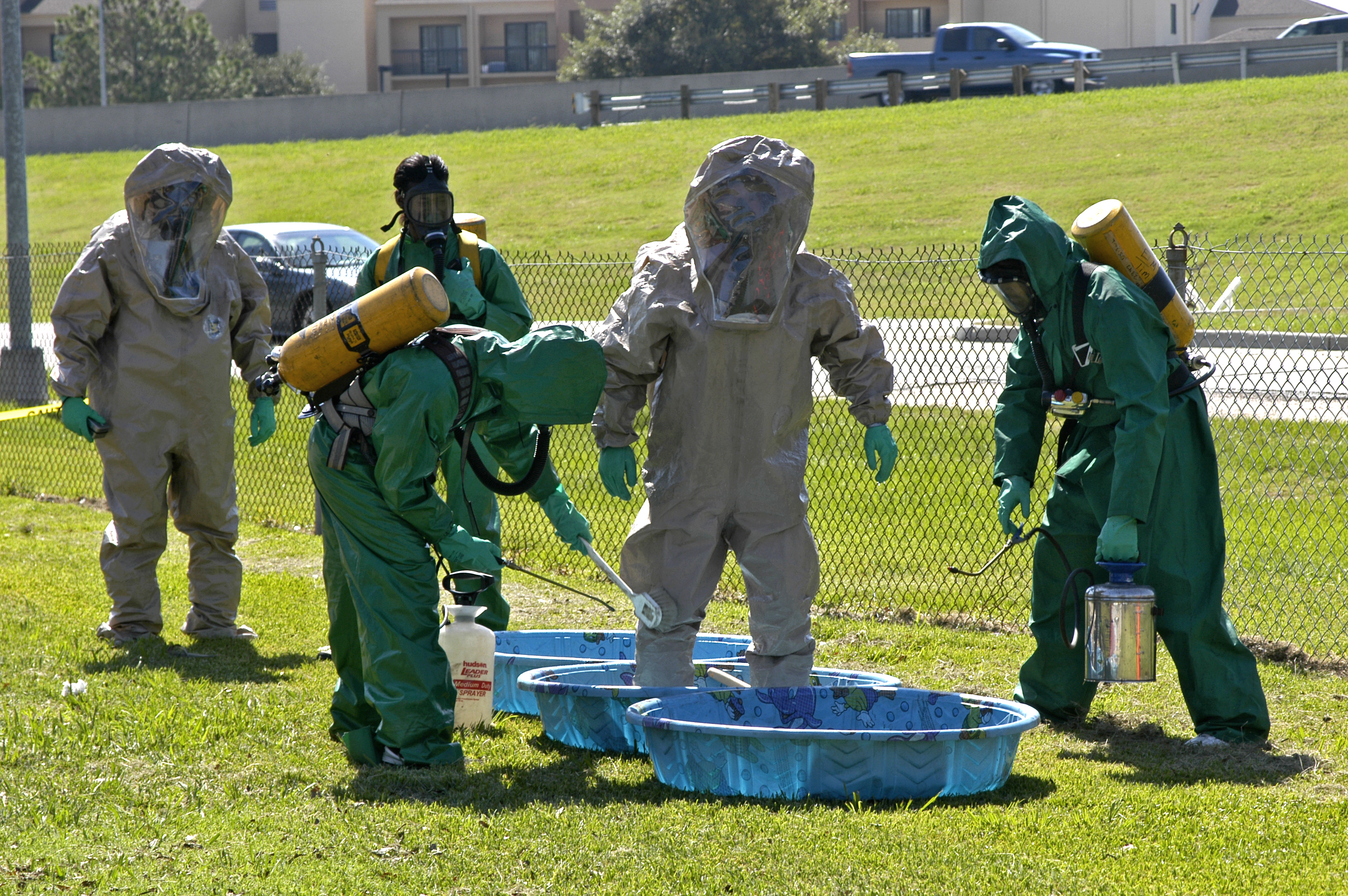
The cultural perception of hazardous materials is often shaped by 'spectacular' failures, such as the Chernobyl disaster or the Bhopal gas tragedy, which have instilled a deep-seated 'Not In My Backyard' (NIMBY) sentiment globally. This anxiety has influenced cinema and literature, with films like Silkwood and Erin Brockovich highlighting the tension between corporate storage practices and public health. The iconic yellow HAZMAT suit has become a universal symbol of danger and bio-hazard, frequently appearing in video games like Half-Life and Resident Evil. This cultural weight forces companies to invest heavily in public relations and transparency reports to maintain their 'social license to operate.'
⚡ Current State & Latest Developments
In 2024, the industry is pivoting toward 'Smart Storage' powered by edge computing and the IIoT. Real-time monitoring of pressure, temperature, and humidity within storage vessels is now standard for Tier 1 facilities. The ongoing conflict in Ukraine has highlighted the vulnerability of chemical and nuclear storage sites to kinetic warfare, prompting the IAEA to call for new international 'safe zones' around such facilities. Furthermore, the rise of lithium-ion battery production has created a new storage crisis, as these units require specific fire suppression systems that traditional water-based sprinklers cannot handle. Companies like Tesla are currently pioneering new modular storage 'Megapacks' that include integrated thermal management.
🤔 Controversies & Debates
The central debate in HAZMAT security pits the 'Right to Know' against 'National Security.' Post-9/11, the Department of Homeland Security (DHS) implemented the Chemical Facility Anti-Terrorism Standards (CFATS), which some critics argue allows companies to hide safety lapses under the guise of security secrecy. Environmental justice advocates, such as those at the Sierra Club, point out that hazardous storage sites are disproportionately located in low-income communities, a phenomenon known as environmental racism. There is also a fierce technical debate regarding the storage of nuclear waste, specifically the stalled Yucca Mountain project, which highlights the impossibility of finding a 'permanent' solution that satisfies all stakeholders.
🔮 Future Outlook & Predictions
The future of hazardous material security lies in autonomous robotics and blockchain for supply chain integrity. By 2030, we expect to see fully 'lights-out' warehouses where Boston Dynamics-style robots perform inspections, removing humans from the 'kill zone' of potential leaks. Blockchain ledgers will likely replace paper manifests, providing an unalterable record of a chemical's journey from the lab to the disposal site. As climate change increases the frequency of extreme weather events, storage facilities will need to be redesigned for 'resilient containment' to prevent 'Natech' (Natural-Hazard-Triggered Technological) disasters. The ultimate goal is a circular economy where 'waste' is stored only temporarily before being reprocessed into new raw materials.
💡 Practical Applications
Practical application of these principles is seen in every modern laboratory and manufacturing plant. High-school chemistry labs utilize flammable liquid cabinets that meet OSHA 1910.106 standards, featuring self-closing doors and dual vents. In the pharmaceutical industry, cold chain storage is vital for hazardous precursors that must remain at cryogenic temperatures to prevent decomposition. Hospitals manage biohazardous waste through strict segregation of 'red bag' materials and sharps containers, which are then neutralized via autoclave or incineration. Even in consumer retail, stores like The Home Depot must follow specific stacking and separation rules for pesticides and pool chemicals to prevent accidental reactions.
Key Facts
- Category
- technology
- Type
- topic