
Contents
Overview
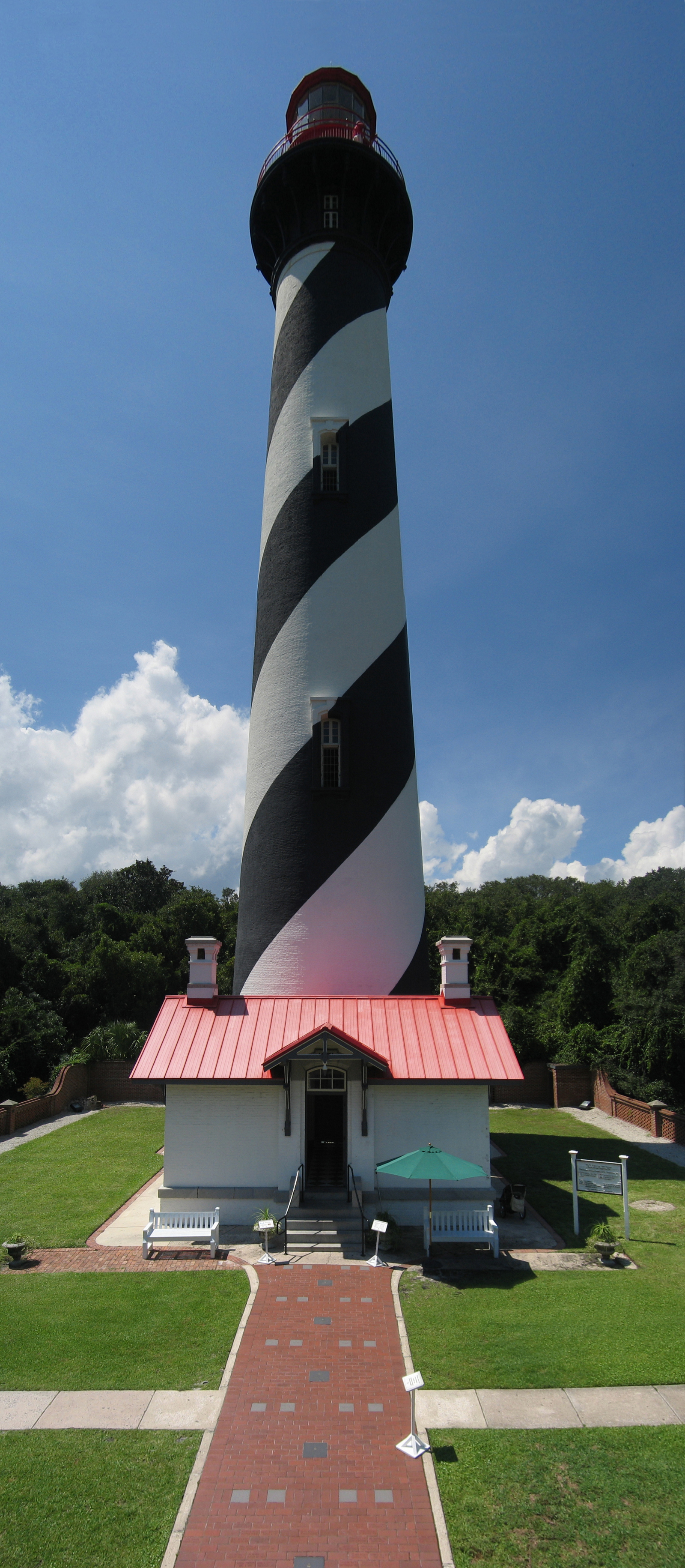
The maritime history of St. Augustine, Florida, is deeply intertwined with the need for a guiding light, a need recognized as early as 1565 by Spanish settlers who established a beacon atop a wooden watchtower. This rudimentary signal marked the beginning of continuous navigational aid in the area. The first official lighthouse, a brick tower erected by the American territorial government, was lit in May 1824, making it Florida's inaugural lighthouse. However, the relentless Atlantic surf claimed this structure, leading to its collapse in 1880. The current, more robust tower, a striking structure with its distinctive black-and-white spiral, was constructed between 1871 and 1874 on higher ground, ensuring its longevity against the encroaching sea. This transition from a Spanish beacon to a territorial lighthouse and finally to the enduring structure of today reflects the evolving geopolitical and technological landscape of the region.
⚙️ How It Works
The St. Augustine Lighthouse operates using a sophisticated first-order Fresnel lens, a revolutionary optical device invented by Augustin-Jean Fresnel in the early 19th century. This lens, composed of numerous precisely cut glass prisms, concentrates the light from a single powerful lamp (historically an oil lamp, now an LED system) into a focused beam that can be seen for miles. The lighthouse's rotation mechanism, originally powered by clockwork and weights, ensures the beam sweeps across the horizon, providing a unique flashing characteristic that identifies it to mariners. The tower itself is constructed from brick, with a distinctive spiral pattern painted on its exterior to enhance visibility during daylight hours. The keeper's house, also part of the historic station, provided living quarters and workspace for the lighthouse keepers and their families, who were responsible for maintaining the light and its complex machinery.
📊 Key Facts & Numbers
The current St. Augustine Lighthouse stands at an impressive height, with its lantern room reaching a significant elevation above sea level. The tower contains a total of 219 steps leading to the top. The first-order Fresnel lens, weighing approximately 5,000 pounds (2,268 kg), is composed of 672 hand-ground prisms. Since its completion in 1874, the lighthouse has been visible for up to 19 nautical miles (35 km). The St. Augustine Lighthouse & Maritime Museum, Inc. reports that over 200,000 visitors annually contribute to the preservation efforts, with admission fees supporting the maintenance of the lighthouse and five other historic structures on the property. The museum's maritime archaeological program has recovered over 100,000 artifacts from shipwreck sites, including the 17th-century Spanish galleon Nuestra Señora de la Concepción.
👥 Key People & Organizations
The St. Augustine Lighthouse & Maritime Museum, Inc. is the steward of this historic site, a not-for-profit organization dedicated to its preservation and interpretation. The museum's leadership, including its board of directors and executive staff, oversees the daily operations, visitor services, and educational programming. Key figures in the lighthouse's history include the numerous lighthouse keepers and their families who maintained the light, often in isolation. While specific names of early keepers are less widely publicized than those of the museum's current administrators, their dedication was crucial. The United States Lighthouse Board was the federal agency responsible for the lighthouse's construction and operation until its functions were absorbed by the United States Coast Guard in 1939. The museum actively collaborates with maritime historians and archaeologists, such as Dr. Michael L. Williams, to enhance its understanding and presentation of the site's rich past.
🌍 Cultural Impact & Influence
The St. Augustine Lighthouse has become an enduring symbol of Florida's coastal heritage, deeply embedded in the local and national consciousness. Its image graces countless postcards, souvenirs, and local businesses, representing not just a landmark but a connection to a bygone era of maritime exploration and commerce. The lighthouse has also found its way into popular culture, notably as a filming location for the 1987 horror film The Light at the End of the World and as a subject of numerous paranormal investigations, fueling its mystique. The museum's educational programs, reaching over 10,000 students annually, foster an appreciation for maritime history and the science of navigation, ensuring the lighthouse's legacy extends to future generations. Its distinctive silhouette is instantly recognizable, evoking a sense of history, resilience, and the romance of the sea.
⚡ Current State & Latest Developments
As of 2024, the St. Augustine Lighthouse remains an active aid to navigation, its powerful LED lamp continuing to sweep the Atlantic. The St. Augustine Lighthouse & Maritime Museum, Inc. actively pursues new avenues for preservation and public engagement. Recent initiatives include ongoing archaeological surveys of nearby shipwrecks and the development of immersive digital exhibits to complement the physical visitor experience. The museum also continues to host special events, including historical reenactments and educational workshops, drawing consistent crowds. Efforts are continually underway to maintain the structural integrity of the tower and its associated buildings, ensuring this vital piece of maritime history endures for centuries to come, a beacon against the challenges of time and nature.
🤔 Controversies & Debates
One of the most persistent debates surrounding the St. Augustine Lighthouse involves its alleged paranormal activity. Numerous ghost stories and alleged hauntings have been reported by visitors and staff, often linked to historical tragedies associated with the lighthouse and its keepers. While the St. Augustine Lighthouse & Maritime Museum, Inc. acknowledges these stories and even incorporates them into some of its tours, it maintains a focus on historical accuracy and scientific interpretation. Skeptics often attribute these phenomena to psychological suggestion, environmental factors, or misinterpretations of natural occurrences. The lighthouse's historical role as a site of both life and potential peril at sea naturally lends itself to such folklore, creating a unique tension between historical fact and popular legend.
🔮 Future Outlook & Predictions
The future of the St. Augustine Lighthouse appears secure, with the St. Augustine Lighthouse & Maritime Museum, Inc. demonstrating a robust commitment to its preservation and continued operation. Advances in LED lighting technology will ensure its efficiency and longevity as an aid to navigation. The museum is likely to expand its digital outreach, offering virtual tours and online educational resources to reach a global audience. Continued archaeological research promises to uncover more about the region's maritime past, potentially adding new narratives to the lighthouse's story. Furthermore, the museum may explore partnerships with other historical maritime sites to create broader heritage tourism initiatives, solidifying St. Augustine's position as a key destination for those interested in seafaring history. The lighthouse will undoubtedly remain a powerful symbol of resilience and guidance.
💡 Practical Applications
The primary practical application of the St. Augustine Lighthouse is its function as an active aid to navigation, guiding ships and boats safely along the Florida coast. Beyond this critical maritime role, the lighthouse serves as a significant tourist attraction, drawing visitors from around the world to experience its history and climb to its summit. The St. Augustine Lighthouse & Maritime Museum, Inc. utilizes the site for extensive educational programs, teaching students about maritime history, navigation, and archaeology. The museum also offers unique event rentals for weddings and corporate functions, generating revenue that directly supports preservation efforts. Furthermore, the lighthouse's historical significance makes it a valuable asset for historical research and cultural heritage studies, preserving the memory of those who relied on its light.
Key Facts
- Category
- place
- Type
- topic