
Contents
Overview
Telecommuting, also known as remote work or working from home, describes a work arrangement where employees perform their job duties outside of a traditional office environment, often from their residences. This practice, while having historical precedents, surged into mainstream adoption with the advent of digital communication technologies and was dramatically accelerated by the COVID-19 pandemic in 2020. It fundamentally alters the employer-employee dynamic, impacting everything from real estate footprints to employee well-being and productivity metrics. The global shift towards telecommuting has reshaped urban planning, spurred innovation in collaboration tools, and ignited ongoing debates about its long-term viability and societal implications. As of 2024, it remains a significant, albeit debated, component of the global labor market.
🎵 Origins & History
The concept of working away from a central office isn't new; artisans and merchants have historically operated from their homes for centuries. Early implementations relied on rudimentary technologies like dumb terminals connected to mainframe computers via telephone lines, a far cry from today's ubiquitous broadband. Pioneers like Jack Nilles, often dubbed the 'father of telecommuting,' championed the idea as a way to reduce traffic congestion and energy consumption. He proposed 'telepolis' – a city without a center – where work could be distributed geographically.
⚙️ How It Works
At its core, telecommuting functions by decoupling work from a fixed physical location. Employees utilize personal computers, smartphones, and reliable internet connections to access company networks, software, and data. Virtual Private Networks (VPNs) are often employed to secure these connections, ensuring data privacy and integrity. Communication and collaboration are facilitated through a suite of digital tools, including video conferencing platforms like Zoom and Microsoft Teams, instant messaging applications such as Slack, and cloud-based project management software like Asana. This digital infrastructure allows for real-time interaction, document sharing, and task management, mimicking many aspects of in-office collaboration.
📊 Key Facts & Numbers
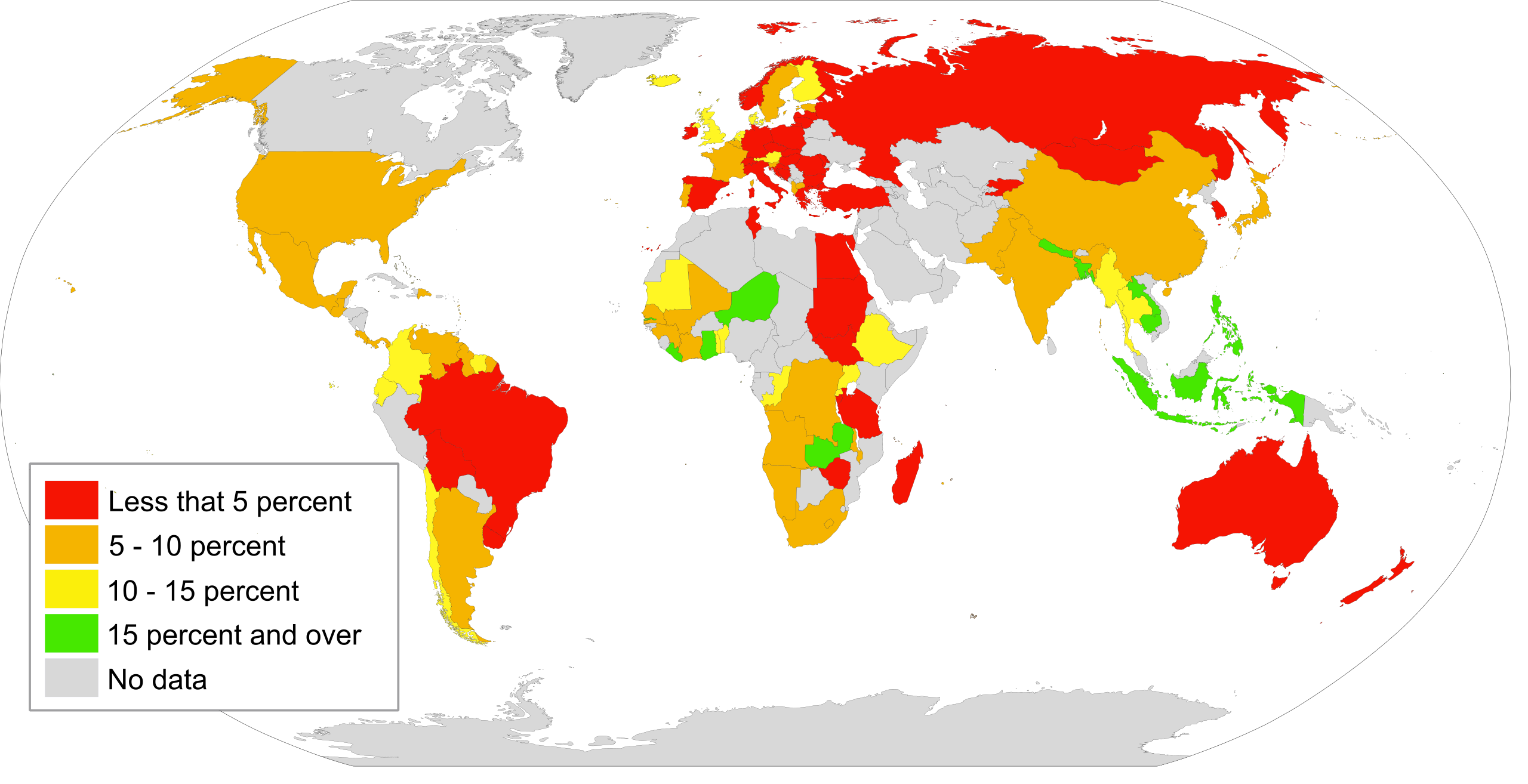
The scale of telecommuting is staggering. The development of more sophisticated collaboration software and virtual reality meeting spaces continues to push the boundaries of what's possible remotely. Emerging trends include 'work from anywhere' policies and the rise of digital nomadism, further challenging traditional notions of employment location.
👥 Key People & Organizations
While Jack Nilles is a foundational figure, many others have shaped the telecommuting landscape. The COVID-19 pandemic itself acted as a massive, unplanned experiment, forcing organizations like Google and Meta Platforms Inc. to rapidly implement remote work policies for millions of employees, fundamentally altering their long-term strategies.
🌍 Cultural Impact & Influence
Telecommuting has profoundly reshaped societal norms and cultural expectations around work. It has blurred the lines between professional and personal life, leading to both increased flexibility and potential for burnout. The rise of remote work has also fueled a geographic redistribution of talent, allowing individuals to live in areas with lower costs of living while still accessing high-paying jobs in major urban centers. This has had ripple effects on real estate markets, local economies, and the very concept of 'company culture.' The visual culture of work has also shifted, with video calls becoming a ubiquitous feature of daily professional life, often showcasing home environments and personal touches.
⚡ Current State & Latest Developments
The telecommuting landscape is characterized by a complex negotiation between employers and employees. The development of more sophisticated collaboration software and virtual reality meeting spaces continues to push the boundaries of what's possible remotely. Emerging trends include 'work from anywhere' policies and the rise of digital nomadism, further challenging traditional notions of employment location. The ongoing debate about the optimal balance between remote and in-office work continues to evolve.
🤔 Controversies & Debates
The controversies surrounding telecommuting are multifaceted. Critics argue that it can hinder spontaneous collaboration, erode company culture, and create a two-tiered workforce where in-office employees have an advantage. Concerns about employee surveillance through monitoring software are prevalent, raising privacy issues. Conversely, proponents highlight benefits like increased employee autonomy, reduced environmental impact from commuting, and access to a wider talent pool. The debate often centers on whether remote work truly fosters productivity or merely masks a decline in engagement, with studies yielding conflicting results depending on methodology and industry. The long-term impact on career progression, particularly for junior employees, remains a significant point of contention.
🔮 Future Outlook & Predictions
The future of telecommuting is likely to be characterized by continued evolution and adaptation. Advancements in augmented reality and virtual reality technologies could create more immersive remote collaboration experiences, potentially bridging the gap between physical and digital presence. We may see the rise of 'distributed companies' that have no central headquarters whatsoever, operating entirely through a global network of remote employees. However, the tension between the desire for flexibility and the perceived benefits of in-office work will persist, leading to ongoing experimentation and policy adjustments by organizations worldwide.
💡 Practical Applications
Telecommuting has a broad range of practical applications across numerous industries. It is fundamental to the operations of tech companies, allowing for global talent acquisition and flexible work schedules. Customer service roles, particularly in call centers, have largely transitioned to remote setups, utilizing cloud-based telephony and CRM systems. Freelancers and independent contractors have long leveraged telecommuting to serve clients worldwide, from graphic designers to software developers. Even in sectors traditionally reliant on physical presence, such as education and healthcare, elements of remote work are being integrated through online learning platforms and telehealth services, demonstrating its pervasive utility.
Key Facts
- Category
- technology
- Type
- concept