
Contents
Overview
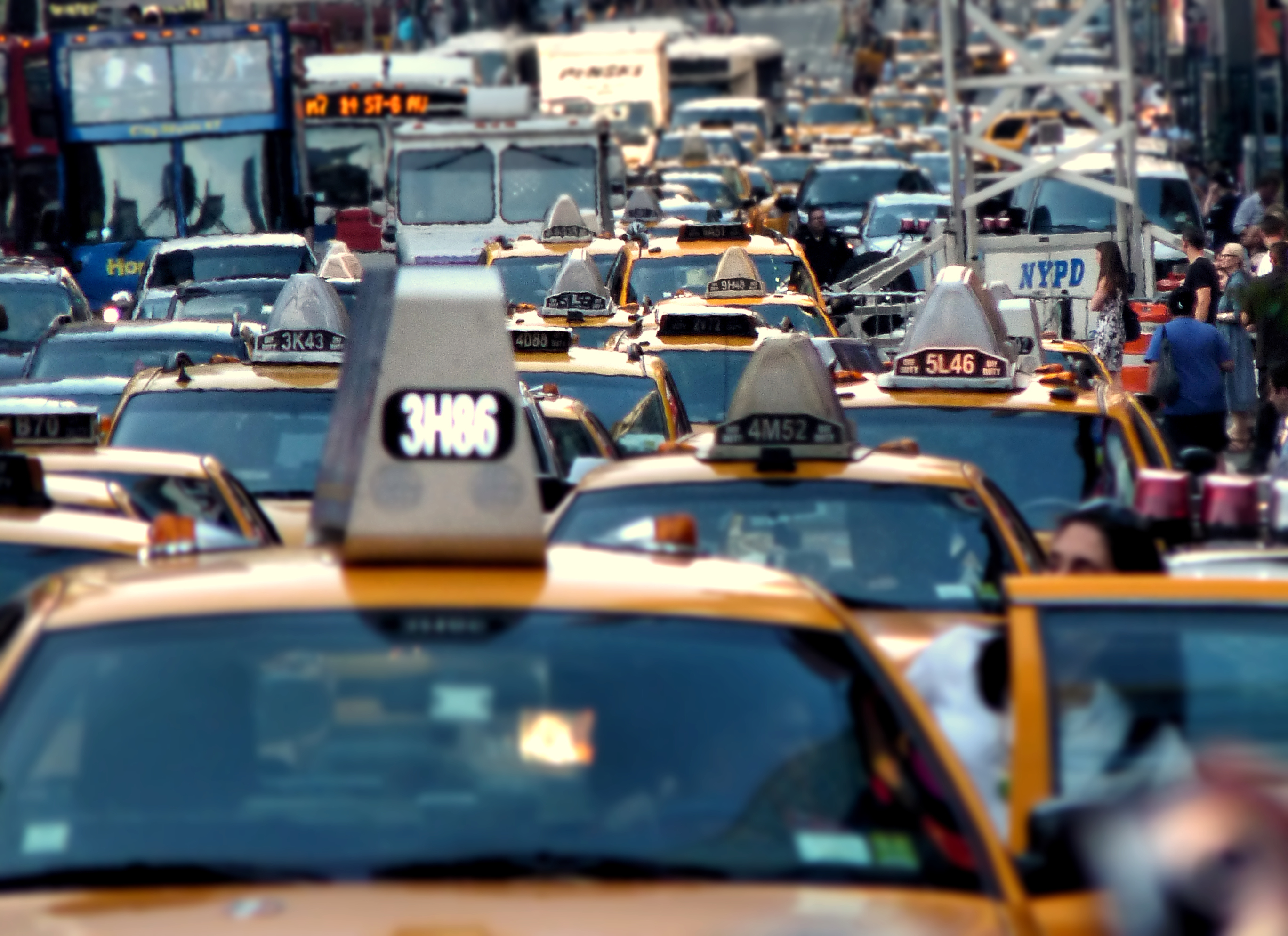
Traffic congestion is a condition on road networks where increased demand for travel leads to slower speeds, longer trip times, and extensive vehicular queuing. When demand significantly exceeds a road's capacity, or that of its intersections, severe congestion, colloquially known as a traffic jam or tailback, ensues. While congestion can affect any transportation mode, this entry focuses on the pervasive issue of automobile congestion on public roads, a direct consequence of our reliance on personal vehicles and urban sprawl. The economic and environmental costs are staggering, impacting productivity, air quality, and driver well-being, making it a persistent challenge for urban planners and policymakers worldwide.
🎵 Origins & History
The roots of traffic congestion can be traced back to the early days of the automobile. Cities like Los Angeles became synonymous with gridlock, a symptom of a transportation paradigm heavily favoring private vehicles over public transit or pedestrian infrastructure.
⚙️ How It Works
Traffic congestion arises when the number of vehicles attempting to use a particular stretch of road exceeds its carrying capacity, or when the flow is disrupted by bottlenecks. This is often modeled using principles from fluid dynamics, where vehicles are treated as particles in a flow. At low densities, vehicles move freely. As density increases, speeds decrease. Beyond a critical density, known as the 'capacity' of the road, the flow can become unstable, leading to stop-and-go waves. These waves propagate backward from points of disruption, such as lane closures, accidents, or simply the sheer volume of cars at intersections. The phenomenon is exacerbated by driver behavior, including sudden braking and lane changes, which can amplify disruptions and create phantom traffic jams that have no obvious external cause. Intersection design and traffic signal timing are critical factors in managing flow and preventing these disruptions from cascading.
📊 Key Facts & Numbers
The environmental impact is equally severe, contributing significantly to air pollution and greenhouse gas emissions, with vehicles idling releasing substantial amounts of CO2 and other harmful pollutants.
👥 Key People & Organizations
While no single individual 'invented' traffic congestion, numerous figures and organizations have shaped our understanding and attempts to mitigate it. Urban planners like Robert Moses in New York City, whose ambitious highway projects significantly altered urban landscapes, are often cited for their role in facilitating car-centric development, inadvertently contributing to congestion. Transportation engineers such as William H. Wilkinson developed early models for traffic flow. Organizations like the Federal Highway Administration (FHWA) in the U.S. and the Transport for London (TfL) are instrumental in managing and studying traffic. Research institutions like the Texas A&M Transportation Institute provide critical data and analysis on congestion trends. The development of smart city technologies by companies like Siemens AG and IBM are also key players in modern traffic management.
🌍 Cultural Impact & Influence
Traffic congestion has profoundly shaped urban culture and daily life. It influences where people choose to live, dictating commutes and impacting work-life balance. The frustration of being stuck in traffic has become a common cultural touchstone, spawning jokes, songs, and even the phenomenon of road rage. The design of cities themselves has been dictated by the need to accommodate cars, leading to sprawling suburbs and often neglecting pedestrian and cycling infrastructure. The constant presence of traffic jams has also fueled demand for alternative transportation solutions, from improved public transportation systems to the rise of ride-sharing services like Uber and Lyft, and the ongoing development of autonomous vehicles. The visual landscape of many cities is now dominated by multi-lane highways and parking structures, a reflection of automotive dominance.
⚡ Current State & Latest Developments
The current state of traffic congestion remains a critical challenge for urban centers globally. While the COVID-19 pandemic offered a temporary reprieve in some areas due to reduced travel, congestion levels have largely rebounded. The ongoing growth of urban populations and continued reliance on private vehicles mean that many cities are experiencing pre-pandemic or even worse traffic conditions. Emerging technologies, including intelligent transportation systems (ITS), real-time traffic data from Google Maps and Waze, and adaptive traffic signal control, are being deployed to optimize flow. However, these are often incremental solutions that struggle to keep pace with demand. The push for micromobility solutions like e-scooters and shared bikes, alongside investments in high-speed rail and expanded subway systems, represent ongoing efforts to diversify urban mobility and alleviate pressure on roads. The rise of electric vehicles has not inherently reduced congestion, as they still occupy road space.
🤔 Controversies & Debates
The debate surrounding traffic congestion is multifaceted. One major controversy lies in the 'induced demand' theory, which posits that building more roads or widening existing ones ultimately leads to more traffic, not less. Critics of this theory argue for continued infrastructure investment. Another debate centers on the effectiveness and equity of congestion pricing or tolling schemes, such as those implemented in London and Stockholm. While proponents argue these reduce traffic and generate revenue for transit, opponents raise concerns about disproportionately affecting lower-income drivers. The prioritization of private vehicles over public transit and active transportation remains a contentious issue, with advocates for walkable cities and robust public transit clashing with those who champion the automobile. The role of urban planning in either exacerbating or alleviating congestion is also a constant point of contention.
🔮 Future Outlook & Predictions
The future of traffic congestion is likely to be shaped by a confluence of technological advancements and policy shifts. The widespread adoption of autonomous vehicles holds the potential to smooth traffic flow by enabling platooning and more efficient driving, but could also increase vehicle miles traveled if not managed carefully. Mobility-as-a-service (MaaS) platforms, integrating various transport options into a single interface, could encourage a shift away from private car ownership. However, the success of these solutions hinges on significant policy interventions, including robust investment in public transit, effective land-use planning that promotes density and mixed-use development, and potentially more aggressive congestion pricing. Without such measures, the trend of increasing congestion in growing urban areas is likely to persist, even with technological advancements. The development of hyperloop technology and advanced urban air mobility solutions could offer long-term alternatives for inter-city and intra-city travel, respectively, but their widespread implementation remains speculative.
💡 Practical Applications
Understanding traffic congestion has direct practical applicati
Key Facts
- Category
- phenomenon
- Type
- topic