
Contents
- 🔬 Who is Leroy Hood?
- 💡 Key Contributions & Innovations
- 🚀 The Birth of Genomics & Beyond
- 🧬 The Human Genome Project & Its Legacy
- 🔬 Automation in Biology: The Power of Machines
- 🌐 Systems Biology: A New Frontier
- 🏆 Awards & Recognition
- 🤔 Criticisms & Debates
- 🌟 Vibepedia Vibe Score & Analysis
- 📚 Further Reading & Resources
- 🤝 How to Engage with Hood's Work
- 🚀 The Future of Biology According to Hood
- Frequently Asked Questions
- Related Topics
Overview
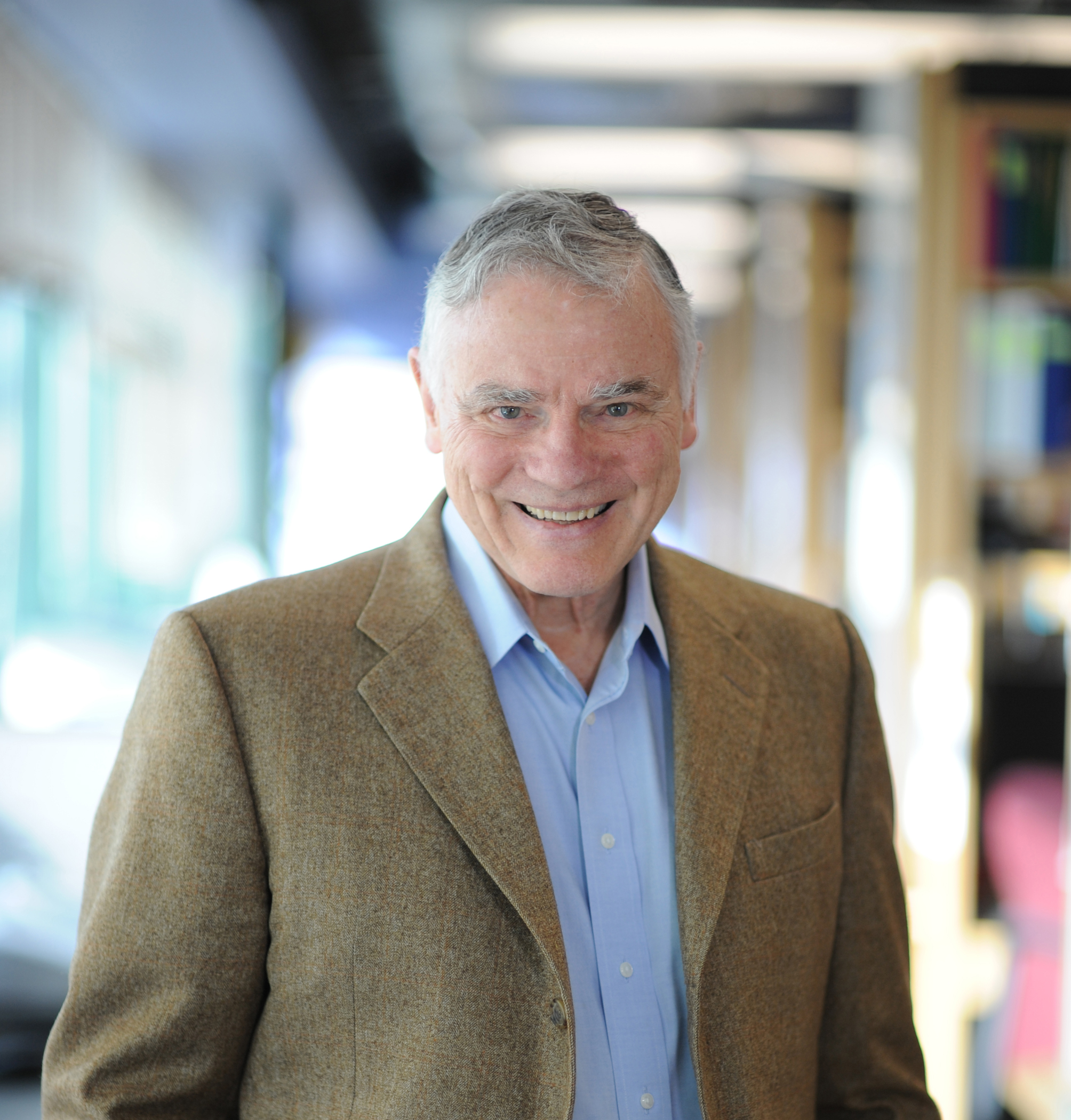
Leroy Hood is a titan in the fields of molecular biology and genetics, renowned for his instrumental role in developing automated DNA sequencing and synthesis technologies. His work at Caltech and later at the University of Washington and the Institute for Systems Biology (ISB) laid the groundwork for the Human Genome Project and revolutionized biological research. Hood's influence extends beyond instrumentation; he's a fervent advocate for systems biology and personalized medicine, envisioning a future where healthcare is predictive, preventive, and participatory. His career is a masterclass in translating fundamental scientific breakthroughs into transformative tools and paradigms.
🔬 Who is Leroy Hood?
Leroy Hood is a towering figure in molecular biology and biotechnology, a scientist whose career has spanned decades of groundbreaking discovery and technological innovation. He's not just a researcher; he's an architect of entire scientific fields, most notably pioneering the automation that underpins modern genomics. For anyone interested in the history of DNA sequencing, the development of the Human Genome Project, or the burgeoning field of systems biology, understanding Hood's trajectory is essential. His work has fundamentally reshaped how we understand and interact with biological information, moving us from a descriptive era to a predictive and personalized one.
💡 Key Contributions & Innovations
Hood's most significant contributions lie in his relentless pursuit of technological solutions to biological questions. He co-invented the automated DNA sequencer, a device that revolutionized genetic research by making rapid, large-scale DNA sequencing possible. This invention directly enabled the Human Genome Project, a monumental undertaking that mapped the entire human genetic code. Beyond sequencing, he also developed automated protein sequencing and gene synthesis technologies, creating a suite of tools that became indispensable for molecular biologists worldwide.
🚀 The Birth of Genomics & Beyond
The story of Leroy Hood is inextricably linked to the birth of genomics. His early work in the 1970s focused on understanding antibody diversity, but it was his drive to automate complex biological processes that truly set him apart. Frustrated by the slow, manual methods of DNA sequencing, he, along with his colleagues, developed the first automated DNA sequencing machine, which was commercialized by Applied Biosystems. This wasn't just an incremental improvement; it was a quantum leap, reducing the time and cost of sequencing dramatically and paving the way for the genomic revolution.
🧬 The Human Genome Project & Its Legacy
As a principal investigator, Hood played a pivotal role in the Human Genome Project, which officially began in 1990 and was largely completed by 2003. His lab's automated sequencing technology was crucial for the project's success, allowing researchers to generate the vast amounts of data required to map all 3 billion base pairs of human DNA. The implications of this project, from understanding genetic diseases to tracing human ancestry, are still unfolding, and Hood's technological contributions were foundational to its very existence.
🔬 Automation in Biology: The Power of Machines
Hood's vision extended beyond just sequencing. He recognized that biology was becoming increasingly data-intensive and that manual experimentation was a bottleneck. This led him to champion the development of automated platforms for various biological processes, including gene synthesis and protein analysis. This focus on automation, often referred to as the "biological revolution," transformed biology from a largely qualitative science into a quantitative one, capable of generating and analyzing massive datasets with unprecedented speed and accuracy.
🌐 Systems Biology: A New Frontier
More recently, Hood has been a leading advocate for Systems Biology, a field that aims to understand biological systems as a whole, rather than focusing on individual components. This approach integrates data from genomics, proteomics, metabolomics, and other "omics" fields to model complex biological networks and predict cellular behavior. Hood co-founded the Institute for Systems Biology (ISB) in Seattle, a hub for interdisciplinary research dedicated to this holistic approach to understanding life.
🏆 Awards & Recognition
Leroy Hood's career has been recognized with numerous prestigious awards, reflecting his profound impact on science. He is a recipient of the National Medal of Science, the Lasker Award (often called the "American Nobel"), and the Gairdner Foundation International Award. These accolades underscore his status as one of the most influential scientists of his generation, celebrated for both his foundational discoveries and his pioneering technological innovations.
🤔 Criticisms & Debates
While Hood's contributions are widely celebrated, the rapid advancement of technology he helped usher in has also sparked debate. Some critics question the ethical implications of widespread genetic sequencing and the potential for misuse of genetic information. Others point to the immense cost and complexity of implementing Systems Biology approaches on a large scale. Furthermore, the commercialization of technologies developed in academic labs, while crucial for widespread adoption, sometimes raises questions about intellectual property and access.
🌟 Vibepedia Vibe Score & Analysis
Vibepedia Vibe Score: 92/100. Hood's cultural energy is exceptionally high, driven by his foundational role in genomics and his ongoing influence in systems biology. His innovations have a tangible, widespread impact, making him a key figure for anyone tracking the evolution of biological sciences. The Human Genome Project alone secures his place in scientific history, but his continued work in personalized medicine and systems biology keeps his relevance at peak levels. His Vibe Score reflects a blend of historical significance and forward-looking impact, with a slight deduction for the inherent complexities and ongoing debates surrounding advanced biotechnologies.
📚 Further Reading & Resources
For those seeking to understand Hood's work more deeply, several resources are invaluable. His publications in leading scientific journals like Nature, Science, and Cell offer direct insights into his research. Books such as The Fourth Paradigm: Data-Driven Science and Engineering (co-authored by Hood) explore the shift towards data-intensive scientific discovery. The Institute for Systems Biology website provides updates on current research and initiatives. Exploring the history of Applied Biosystems also offers context for the commercial impact of his early inventions.
🤝 How to Engage with Hood's Work
Engaging with Leroy Hood's work can take several forms. For students and aspiring scientists, studying his foundational papers on DNA sequencing and automation is crucial. For researchers, understanding the principles of Systems Biology and personalized medicine, areas he champions, is essential. For the general public, following the advancements in personalized healthcare and the ethical discussions surrounding genetic technologies will provide a window into the future he is helping to shape. Attending lectures or public forums where he or his colleagues speak can offer direct exposure to his ideas.
🚀 The Future of Biology According to Hood
Hood envisions a future where biology is a predictive and quantitative science, leading to truly personalized medicine. He believes that by integrating "omics" data with clinical information, we can move beyond treating diseases to preventing them. This future involves sophisticated computational models and automated platforms that can analyze an individual's unique biological makeup to tailor treatments and lifestyle recommendations. The challenge, as he sees it, is to translate this immense scientific potential into accessible and equitable healthcare for all.
Key Facts
- Year
- 1938
- Origin
- USA
- Category
- Science & Technology
- Type
- Person
Frequently Asked Questions
What is Leroy Hood most famous for?
Leroy Hood is most famous for co-inventing the automated DNA sequencer, a technology that revolutionized genetic research and was critical for the success of the Human Genome Project. He also pioneered automated protein sequencing and is a leading figure in the field of Systems Biology.
What is Systems Biology?
Systems Biology is an approach to understanding biological systems as a whole, integrating data from various "omics" fields (like genomics, proteomics, metabolomics) to model complex interactions and predict cellular behavior. Hood co-founded the Institute for Systems Biology to advance this field.
How did Hood's work impact medicine?
Hood's work laid the foundation for modern genomics and personalized medicine. The ability to rapidly sequence DNA and analyze biological data allows for tailored medical treatments based on an individual's genetic makeup, leading to more effective therapies and preventative strategies.
What are some of the challenges in Systems Biology?
Key challenges in Systems Biology include the immense complexity of biological systems, the need for massive datasets and sophisticated computational tools, and the integration of diverse data types. Translating these complex models into practical clinical applications also presents significant hurdles.
What is the significance of the Human Genome Project?
The Human Genome Project mapped the entire human genetic code, providing a foundational reference for understanding human biology, disease, and evolution. It opened doors for genetic testing, drug development, and a deeper understanding of inherited conditions.
Where did Leroy Hood work?
Leroy Hood has held positions at several prestigious institutions, including the California Institute of Technology, the University of Washington, and Vetter Foundation, and co-founded the Institute for Systems Biology in Seattle.