
Contents
- 🚀 What is the PDCA Cycle?
- 🎯 Who Benefits from PDCA?
- 🔄 The Four Phases: Plan, Do, Check, Act
- 📈 Historical Roots and Evolution
- 💡 Real-World Applications & Case Studies
- ⚖️ PDCA vs. Other Improvement Methodologies
- ⚠️ Common Pitfalls and How to Avoid Them
- 🌟 Vibepedia Vibe Score & Controversy Spectrum
- 🛠️ Tools and Techniques for Each Phase
- 🔮 The Future of PDCA in a Digital Age
- ✅ Getting Started with PDCA
- 📞 Further Resources & Contact
- Frequently Asked Questions
- Related Topics
Overview
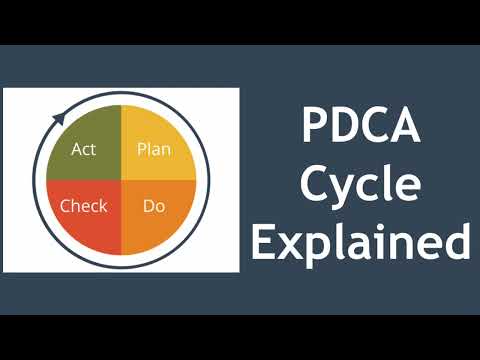
The PDCA cycle, also known as the Deming cycle or Shewhart cycle, is a four-step iterative management method used for the control and continuous improvement of processes and products. It begins with 'Plan' (define the problem and plan for change), moves to 'Do' (implement the plan on a small scale), then 'Check' (monitor and evaluate the results), and finally 'Act' (standardize the change or revise the plan). This cyclical approach, popularized by W. Edwards Deming, is fundamental to Lean manufacturing, Six Sigma, and agile methodologies, driving incremental yet persistent gains in efficiency and quality across industries. Its enduring relevance lies in its simplicity and its powerful ability to foster a culture of ongoing learning and adaptation.
🚀 What is the PDCA Cycle?
The Plan-Do-Check-Act is a four-step iterative management method used for the control and continuous improvement of processes and products. It's not a one-off fix but a perpetual loop designed to drive incremental gains. Think of it as the engine that powers Kaizen initiatives, ensuring that changes are not only implemented but also sustained and built upon. Its elegance lies in its simplicity, making it accessible to teams across various industries, from manufacturing floors to software development sprints.
🎯 Who Benefits from PDCA?
Virtually any organization aiming for operational excellence can leverage the PDCA cycle. It's particularly potent for ISO 9001 practitioners, Lean Manufacturing advocates, and Six Sigma practitioners seeking to refine their processes. Project managers use it to manage scope creep and improve project outcomes, while customer service teams can employ it to enhance client satisfaction. Even individual professionals can apply its principles to personal development and skill enhancement, making it a universally applicable framework for growth.
🔄 The Four Phases: Plan, Do, Check, Act
The cycle begins with Plan: identifying a problem or opportunity, analyzing the current situation, and developing a hypothesis or plan for improvement. Next is Do: implementing the plan, often on a small scale or as a pilot test, to gather data and observe outcomes. Check involves analyzing the results of the 'Do' phase, comparing them against expected outcomes, and identifying deviations or successes. Finally, Act is where the learnings are consolidated; successful changes are standardized and implemented broadly, while unsuccessful ones are modified or discarded, leading back to the 'Plan' phase for the next iteration.
📈 Historical Roots and Evolution
The PDCA cycle's lineage can be traced back to the early 20th century, heavily influenced by the work of Walter A. Shewhart, often called the 'father of statistical quality control'. He introduced the 'Shewhart Cycle' in his 1939 book, Statistical Method from the Viewpoint of Quality Control. Later, W. Edwards Deming, a pivotal figure in the post-war Japanese industrial revival, popularized and refined the concept, renaming it the 'Deming Cycle' or PDCA. Deming emphasized its role in management and innovation, moving it beyond mere quality control to a broader strategic tool.
💡 Real-World Applications & Case Studies
Manufacturing giants like Toyota Motor Corporation have long integrated PDCA into their Toyota Production System, using it to continuously refine assembly lines and reduce waste. In software development, teams use PDCA principles within Agile Software Development to iterate on features, fix bugs, and improve development workflows. Healthcare organizations employ it to reduce medical errors and improve patient care protocols, demonstrating its versatility across diverse operational challenges.
⚖️ PDCA vs. Other Improvement Methodologies
Compared to methodologies like Define-Measure-Analyze-Improve-Control (a core component of Six Sigma), PDCA is generally simpler and more iterative, focusing on incremental changes rather than large-scale problem-solving. While Lean Principles also emphasize waste reduction and continuous improvement, PDCA provides a structured framework for how to achieve those goals. Unlike Waterfall project management, which is linear, PDCA is inherently cyclical, promoting ongoing adaptation rather than a fixed end-state.
⚠️ Common Pitfalls and How to Avoid Them
A frequent misstep is treating PDCA as a linear process, completing one cycle and then stopping, rather than embracing its iterative nature. Another pitfall is inadequate planning or insufficient data collection during the 'Do' and 'Check' phases, leading to flawed conclusions. Teams might also fail to 'Act' decisively, either by not standardizing successful changes or by not learning from failures. Resistance to change from Organizational Culture can also derail PDCA efforts, highlighting the need for strong leadership support.
🌟 Vibepedia Vibe Score & Controversy Spectrum
Vibepedia assigns the PDCA Cycle a Vibe Score of 85/100, reflecting its widespread adoption and enduring relevance in business and quality management. The Controversy Spectrum for PDCA is low, as its fundamental principles are widely accepted. However, debates do arise regarding its implementation depth, particularly whether it's being used superficially or as a genuine driver of systemic change. Some critics argue that its simplicity can lead to underestimation of the effort required for true cultural integration.
🛠️ Tools and Techniques for Each Phase
For the Plan phase, tools like Root Cause Analysis (e.g., 5 Whys, Fishbone diagrams) and SWOT Analysis are invaluable. The Do phase benefits from Pilot Testing and Process Mapping to visualize the implementation. Check relies heavily on Statistical Process Control (SPC) charts, data analysis, and Key Performance Indicators (KPIs). The Act phase often involves Standard Operating Procedures (SOPs) and Training and Development programs to embed the improvements.
🔮 The Future of PDCA in a Digital Age
The PDCA cycle's future is intrinsically linked to the rise of Digital Transformation and Data Analytics. Modern iterations often incorporate real-time data collection and AI-driven analysis to accelerate the 'Check' and 'Act' phases. Concepts like CI/CD in software development are essentially PDCA loops at a rapid pace. The challenge will be to maintain the human element of critical thinking and learning amidst increasing automation, ensuring PDCA remains a tool for intelligent adaptation, not just automated execution.
✅ Getting Started with PDCA
To begin implementing the PDCA cycle, start with a clearly defined problem or a specific process you wish to improve. Assemble a cross-functional team with relevant expertise and clearly define roles and responsibilities. Dedicate time for thorough planning, including setting measurable objectives and identifying potential obstacles. Ensure all team members understand the iterative nature of the cycle and are empowered to contribute to each phase. Documenting each step, even small changes, is crucial for tracking progress and facilitating future learning.
📞 Further Resources & Contact
For deeper insights into implementing PDCA and related methodologies, explore resources from organizations like the American Society for Quality (ASQ) and the International Organization for Standardization (ISO). Many universities offer courses on Operations Management and Quality Engineering that cover PDCA extensively. For practical application, consider consulting with Lean Six Sigma Black Belts or Management Consultants specializing in process improvement. Vibepedia's knowledge graph can further connect you to specific case studies and expert profiles.
Key Facts
- Year
- 1950
- Origin
- Walter Shewhart (statistical quality control), popularized by W. Edwards Deming
- Category
- Business Management & Quality Control
- Type
- Methodology
Frequently Asked Questions
Is PDCA only for manufacturing?
Absolutely not. While its roots are in manufacturing, the PDCA cycle is a versatile framework applicable to any process or system. Service industries, healthcare, education, and even personal development can benefit from its structured approach to problem-solving and improvement. The core principles of planning, doing, checking, and acting are universal to any endeavor seeking refinement.
How long does a PDCA cycle take?
The duration of a single PDCA cycle can vary dramatically, from a few hours for a minor adjustment to several months for a complex systemic change. The key is not the speed but the iterative nature. Each cycle should lead to learning and refinement, feeding into the next iteration. The goal is continuous improvement, not necessarily rapid completion of a single cycle.
What's the difference between PDCA and DMAIC?
PDCA is a simpler, more general iterative cycle for continuous improvement, often used for smaller, ongoing adjustments. DMAIC (Define, Measure, Analyze, Improve, Control) is a more structured, data-driven problem-solving methodology, typically used for larger, more complex issues, especially within Six Sigma projects. DMAIC has distinct phases with specific deliverables, whereas PDCA is more fluid and adaptable.
Can PDCA be used for innovation?
Yes, PDCA can be a powerful tool for innovation, particularly for developing and refining new products or services. The 'Plan' phase can involve market research and concept development, 'Do' can be a pilot launch or prototype testing, 'Check' analyzes customer feedback and performance data, and 'Act' refines the offering or prepares for a broader rollout. It allows for learning and adaptation throughout the innovation process.
What if the 'Do' phase fails?
Failure in the 'Do' phase is not an endpoint but a crucial learning opportunity within the PDCA cycle. The 'Check' phase is designed to analyze why it failed. The 'Act' phase then involves modifying the original plan based on these learnings, or even discarding the approach if it's fundamentally flawed. The key is to avoid repeating the same mistakes and to adapt the strategy based on empirical evidence.
How do you measure success in PDCA?
Success in PDCA is measured by achieving the objectives set in the 'Plan' phase. This could be a reduction in errors, an increase in efficiency, improved customer satisfaction scores, or a successful implementation of a new procedure. Beyond specific metrics, success is also indicated by the team's ability to learn from each cycle and to institutionalize positive changes, leading to sustained improvement over time.